How to Get Your Content Recommended by ChatGPT?
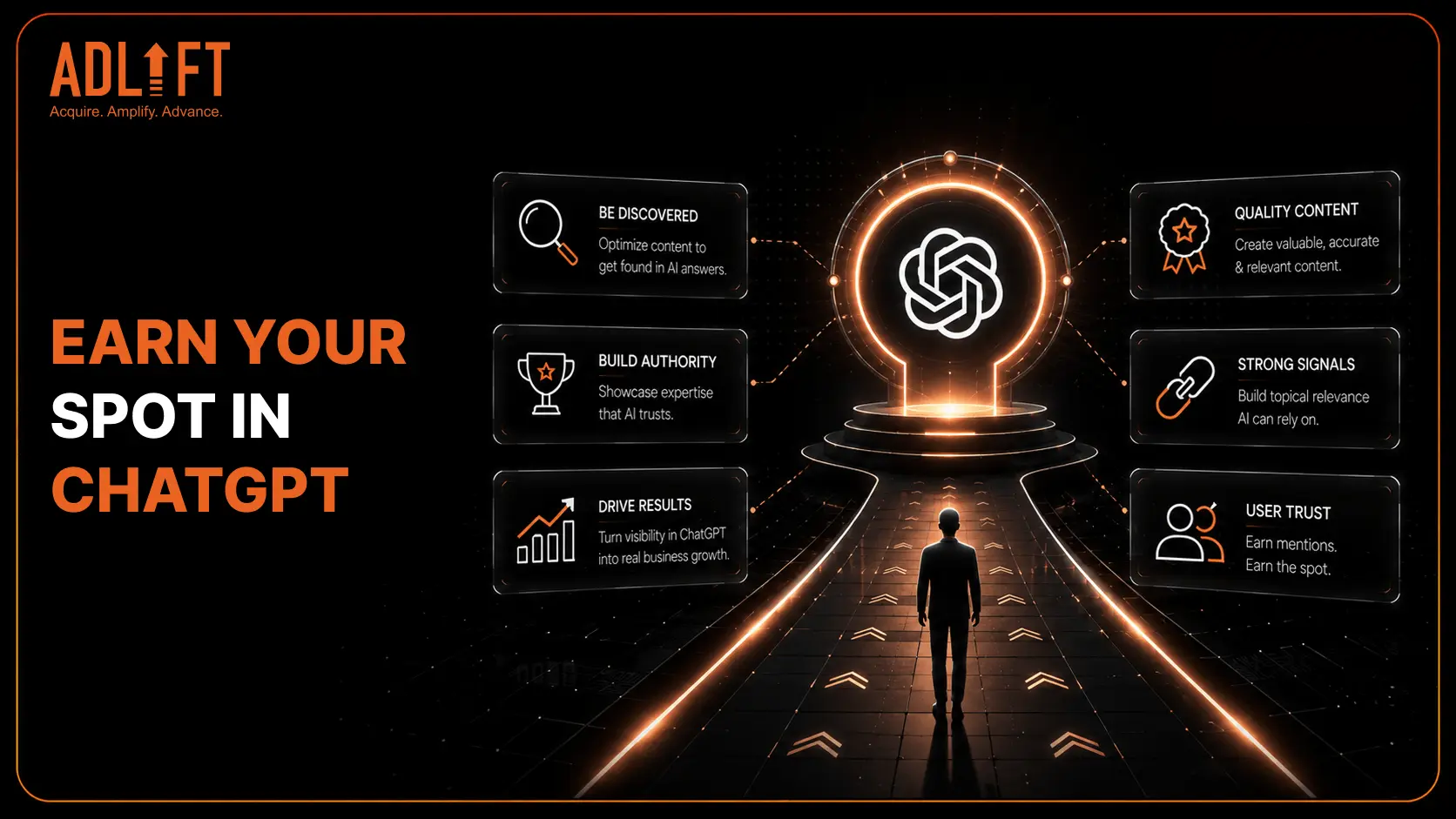
There’s a new gatekeeper standing between your content and your next customer, and it doesn’t care about your keyword density. It cares whether it trusts you enough to say your name out loud.
Here’s the thing most teams get wrong: getting cited by ChatGPT isn’t SEO with a few extra steps bolted on. It runs on retrieval, trust signals, and timing, a completely different scoreboard than the one most content teams are still playing to. You can be ranking #1 on Google for a query and still never show up in the ChatGPT answer to that exact same question. That gap is where this article lives.
A few numbers make the stakes clear. Pew Research Center’s June 2026 survey found that 44% of U.S. adults now report using ChatGPT, up from 34% just a year earlier, and roughly 60% now have read AI-generated summaries instead of scrolling through search results. Put those two together, and “getting cited” is quickly becoming as valuable as “ranking #1,” except most brands don’t have a strategy for it yet.
The Two Ways In: Training Data vs. Live Retrieval
Before the tactics, it helps to understand what’s actually happening under the hood, because everything below hangs off this distinction.
What is Generative AI?
Generative AI is the part most people already picture: a model like ChatGPT predicting the next most likely words based on patterns it learned during training. It’s producing an answer from memory, not going out and checking anything.
What is Agentic AI?
Agentic AI is the part most people miss: a system that takes action, searching, retrieving, comparing sources, and citing them, rather than answering purely from memory. This is the mode that decides whether a brand ever gets a shot at being mentioned at all.
That distinction, agentic AI vs. generative AI, is the hinge of this entire topic. When ChatGPT decides to browse instead of just generate, it stops being a text predictor and starts behaving like a researcher checking its sources. That’s the exact moment a brand gets pulled into the answer, or quietly left out of it.
So there are really only two doors in. A brand can already live inside the model’s training data, baked in from whatever OpenAI trained on. Or it can get retrieved live, off the open web, in response to a specific question. Most companies are only trying to walk through the first door, hoping enough brand awareness eventually seeps into training. Fewer are actively building for the second, even though it’s the one they can influence starting today.
Write Like You’re the Source, Not the Story
This is the section where most content teams are quietly sabotaging themselves, usually without realizing it.
Audit for Extractability
Could a single sentence be lifted straight out of this page and dropped into a ChatGPT answer, and still make complete sense on its own? If the answer only makes sense in the context of three paragraphs before it, it’s not built to be cited.
Match How People Actually Ask
Build sections around the actual phrasing people type into a chat box. Conversational, specific questions, not stiff keyword strings optimized for a search bar that increasingly isn’t the entry point anymore.
Lead With the Answer
Put the answer first, not last. This one trips up even experienced content teams, because traditional storytelling instincts push toward building up to a conclusion. Bury the payoff, and ChatGPT will simply find someone else’s version of it, one that got to the point faster.
Prioritize Freshness Over Volume
Freshness matters more than most teams assume, too. Pages updated recently are far more likely to get pulled from live retrieval instead of an outdated snapshot sitting somewhere in training data. That’s a strong argument for prioritizing updates to proven, already-strong pages over constantly publishing more thin, net-new ones.
Your Website Isn’t the Whole Pitch
Here’s where the lens has to shift off-domain, because that’s where ChatGPT is doing most of its actual trust-checking.
ChatGPT leans hard on what other people and publications say about a brand, not just what the brand says about itself. A perfectly optimized page on your own site is a starting point, not a guarantee.
Map Your Mention Gaps
Start by mapping current mentions and the gaps across review sites, forums, and the industry publications that actually matter in your category. You can’t fix a gap you haven’t measured.
Close the “Best Of” Gap
Find the “best of,” “top,” and comparison content where competitors already show up, and your brand is invisible. Closing that gap deserves to be treated as a real priority, not a nice-to-have PR line item.
Build Something Worth Citing
Original data, named frameworks, and proprietary research travel further than generic advice, because they give other sites a genuine reason to cite the brand. That third-party citation is what eventually gives ChatGPT a reason to cite it too. This is exactly the off-page, digital PR, and authority-building work AdLift runs for clients, closing the “best of” and third-party mention gaps that determine whether ChatGPT trusts a brand enough to recommend it in the first place.
Stop Guessing, Start Watching
None of the above matters if there’s no way to confirm it’s working.
Most analytics stacks were never built to answer a simple question: is ChatGPT actually mentioning us? That blind spot is the reason so many “AI SEO” efforts go completely unmeasured, teams make changes, feel optimistic, and have no real evidence either way.
That’s the gap AdLift is built to close on the content side, helping brands create the kind of citable, trust-backed content that ChatGPT actually pulls into its answers. But building for citations only gets you halfway.
This is where Tesseract by AdLift’s ChatGPT visibility tracking comes in, pinpointing exactly when, where, and how often a brand gets cited, and which pages are earning it. Pair that with a 30-90 day trend window after any content or authority push, so cause and effect become visible instead of assumed.
Recommendation Has to Be Earned Twice
Getting into a ChatGPT answer takes content built to be lifted, a reputation built beyond the brand’s own site, and proof that it’s actually working. Skip any one of those, and a brand is just publishing into the void, hoping to be noticed by a system that was never designed to notice quietly.
AdLift builds the content and authority strategy that gets brands cited by ChatGPT, while Tesseract shows exactly when and where those citations are happening, so every move you make can be measured against real citation data, not guesswork.
The brands showing up in AI answers a year from now are the ones building toward it today.
Source: