
Google’s Biggest Move in 25 Years: The New Intelligent Search Box Has Arrived
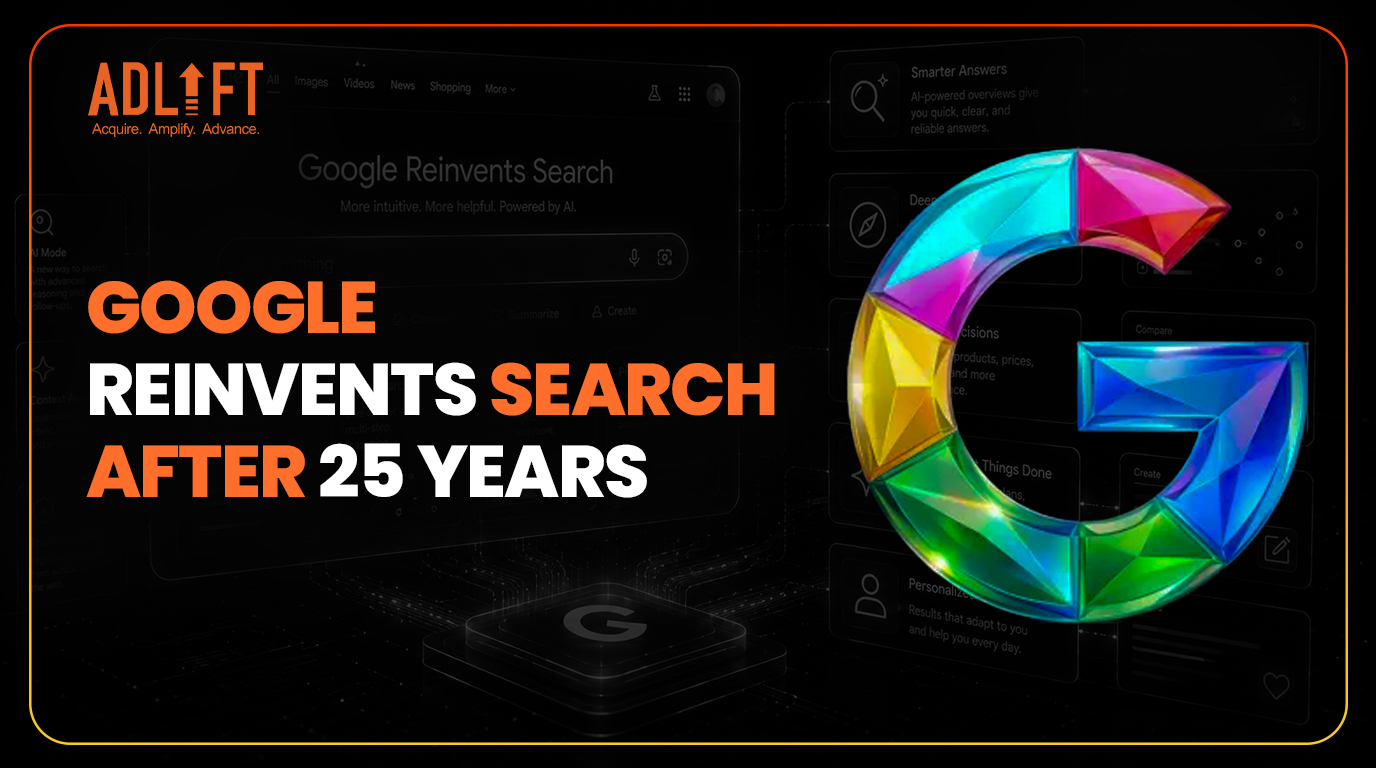
For nearly three decades, the Google search box has served as the virtual lobby of the internet. It is a design so simple and intuitive that it fundamentally shaped how generations perceive the digital world. That clean, white interface was the driving force behind Alphabet Inc.’s meteoric rise, turning a college research project into an undisputed global superpower.
But the era of the classic search engine is officially over.
At the Google I/O developers conference in Mountain View, California, Chief Executive Officer Sundar Pichai announced a radical transformation. The company is completely reimagining its iconic search bar with artificial intelligence, marking what it calls the biggest change in more than 25 years.
The Shift to a Conversational, Multi-modal Internet
While Google has previously experimented with an optional “AI Mode,” this upgrade represents a total systemic overhaul. The entire search bar will now be powered natively by Google’s advanced Gemini 3.5 Flash model.
The traditional list of blue links is no longer the default centerpiece. Instead, Google Search will generate a highly customized page featuring an AI-generated summary of your query. This summary triggers an immediate conversation with AI Mode directly on the main page, allowing users to ask natural follow-up questions in a layout reminiscent of OpenAI’s ChatGPT.
Furthermore, this new model goes far “beyond autocomplete” to help users formulate complex queries. The input mechanism has been entirely generalized; users are no longer restricted to typing text. The new intelligent search box allows for the seamless uploading of images, files, videos, and even active Chrome tabs as search inputs.
Enter the Era of Background AI Agents
The transformation goes deeper than a simple interface redesign. Google is introducing a workflow shift where software, rather than humans, will increasingly perform internet browsing.
During the conference, Google’s Head of Search, Liz Reid, unveiled “information agents” designed to handle complex tracking tasks in the background. Users can instruct these agents to monitor highly specific datasets, such as real-time market movements in a financial sector or new apartment listings. The agent maps out a monitoring plan, accesses Google’s real-time tools, tracks updates, and alerts the user with a synthesized summary and direct links when specific conditions are met.
Taking this concept a step further, Google announced Gemini Spark, an autonomous AI agent capable of executing complex multi-step tasks in the background. Remarkably, Gemini Spark continues working even after a user closes their laptop or locks their smartphone screen.
The Looming Content Collapse
While tech enthusiasts are celebrating these capabilities, the update has sent shockwaves through industries that rely on organic web traffic. If Google answers every question directly on its landing page, users have little reason to click through to external websites.
When Google first introduced AI-assisted results, news publishers warned of “catastrophic” impacts. Those fears have already begun materializing. Over the past year, news websites and small businesses experienced sharp traffic declines as consumer habits shifted toward conversational AI chatbots.
Lily Ray, Vice President of SEO Strategy and Research at digital marketing agency Amsive, has issued stark warnings regarding this trajectory.
Speaking to Technology Magazine, Ray noted that these changes are “going to have a devastating impact on the Internet.” She warned that the shift will severely cut into the primary revenue source for publishers and disincentivize independent content creators who depend on organic search traffic to sustain millions of websites.
Writing for The Verge, tech reporter Jay Peters expressed similar concerns, suggesting a future where Google forces everything to happen within its universal box. “Google doing everything also means a lot of the web that Google relies on collapses under it,” Peters observed, adding that the tech giant seems determined to build an all-in-one search bar “no matter the cost.”
Search Revolution Has Already Begun
The transformation of Google’s search experience marks a major shift in how users interact with information online. By moving from a traditional link-based system to an AI-powered, conversational, and multi-modal interface, search is becoming more direct, personalized, and action-oriented than ever before.
This evolution reflects a broader shift in digital behavior, where users increasingly expect instant answers, smarter assistance, and seamless task handling within a single interface. While this brings greater convenience and efficiency, it also signals a structural change in how information is discovered and consumed across the internet.
As this new era unfolds, the focus is likely to move further toward intelligent systems that better understand intent, process complex inputs, and deliver context-rich responses in real time.
