How Does Perplexity Work? Sources, Citations, and Rankings Explained
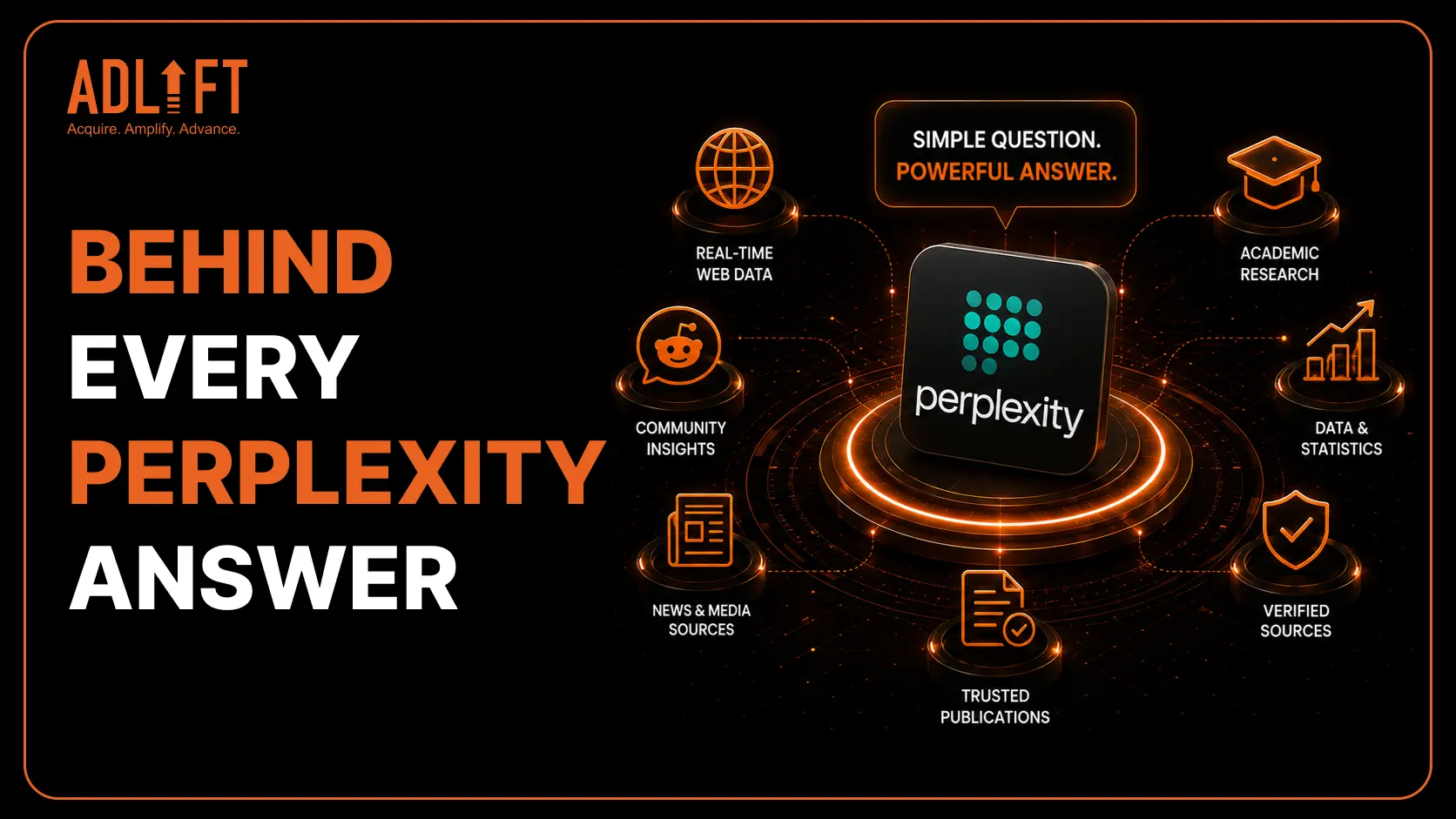
Search discovery happens inside AI-generated answers rather than only across ranked links. Perplexity combines language models with real-time web retrieval to deliver responses supported by linked references. Its growth makes this shift important for marketers, publishers, and SEO teams.
According to research estimates, Perplexity attracted 138.1 million visits in May 2026. By July, that figure had increased to approximately 139.47 million. Meanwhile, monthly traffic estimates reached around 170 million at another point during the year, highlighting the platform’s continued growth in AI-powered search.
It processed nearly 780 million queries in May 2025, while India saw app downloads rise 600% year over year during Q2 2025. Understanding how Perplexity works matters because Perplexity sources and Perplexity citations influence visibility beyond rankings.
Let us learn how brands can strengthen their presence across Perplexity.
What is Perplexity and Why Does it Matter for Search Visibility?
Perplexity is changing search visibility by combining conversational answers with cited web sources, creating new opportunities for brands to earn authority and discovery beyond traditional rankings.
Perplexity as an AI Answer Engine
Perplexity describes itself as an AI-powered search engine that searches the web and produces conversational answers supported by verifiable sources. Users can follow its citations to examine the original information behind a response.
How Perplexity Differs From Traditional Search Engines
Traditional search generally presents pages for users to assess independently. Perplexity retrieves information and synthesizes relevant findings before presenting linked sources for further research.
| Traditional Search | Perplexity |
| Primarily returns ranked pages | Generates synthesized answers |
| Users compare sources manually | AI combines retrieved information |
| Links form the main discovery experience | Answers and citations share visibility |
| New searches often restart research | Follow-ups can retain conversational context |
Why Perplexity Citations Matter for Brands and Publishers
Perplexity citations place publishers directly alongside information presented within AI-generated answers. This creates another discovery opportunity for websites, experts, products, and brands before users necessarily visit individual webpages.
How Does Perplexity Work?
Understanding how Perplexity works becomes easier when the process is viewed as four connected stages.
Query Understanding and Search Intent Analysis
Perplexity uses language models to interpret a question’s context and nuances before determining what information should support the answer.
Real-time Web Retrieval and Source Selection
The platform searches the web and can draw from articles, websites, academic papers, forums, videos, and other relevant resources. Its search API separately provides real-time ranked web results from a continuously refreshed search system.
AI Processing and Answer Generation
Retrieved information is analyzed and synthesized into a conversational response. Numbered citations connect information within that response to original webpages for verification.
Follow-up Questions and Contextual Search Experiences
Perplexity maintains conversational context, allowing users to refine questions, compare alternatives, or explore related issues without restarting their research journey.
What are Perplexity Sources and How are They Selected?
Perplexity sources shape the quality and credibility of AI-generated answers, making source selection an important factor in how brands earn visibility and citations.
How Perplexity Finds Sources Across the Web
Perplexity sources may include publications, company websites, documentation, research papers, forums, videos, and other accessible online materials relevant to a user’s question.
Why Authority and Relevance Influence Perplexity Sources
Perplexity says its search experience gathers information from authoritative, high-quality, and relevant sources. However, it does not publicly provide a complete consumer-search ranking formula.
SEO teams should therefore treat relevance, clarity, evidence, and authority as practical optimization principles rather than guaranteed ranking factors.
The Difference Between Being Discovered and Being Cited
Being discoverable means Perplexity can locate or access a page. Earning a citation means information from that page contributes sufficiently to a response to receive a linked reference.
The distinction matters because appearing in conventional search results does not automatically guarantee inclusion among Perplexity citations.
How Third-party Mentions Strengthen Source Credibility
Independent industry coverage, customer reviews, research references, expert commentary, and partner pages can create additional evidence around a brand or entity. These signals should develop genuine reputation and recognition rather than exist only to manipulate AI visibility.
How Perplexity Citations Work and Why They Matter
Perplexity citations connect AI-generated answers to supporting webpages, helping users verify information while giving brands and publishers another measurable form of visibility.
What Counts as a Perplexity Citation?
A Perplexity citation is a numbered, linked reference connecting information within a generated answer to an original online source. Perplexity uses these references to support verification and additional research.
How Citations Build Trust and Verification
Citations allow users to inspect supporting evidence rather than accepting every generated statement without context. They also make source transparency a visible part of the Perplexity research experience.
Why Some Pages Earn Citations Over Others
Pages offering direct answers, original evidence, current facts, useful context, and clear structure provide stronger material for retrieval and synthesis. These characteristics improve citation readiness, although Perplexity does not disclose a guaranteed formula for citation selection.
Common Reasons Pages Fail to Receive Citations
Generic information, vague answers, unsupported claims, outdated statistics, weak topical coverage, and technical access problems can limit a page’s usefulness during retrieval.
How Perplexity Ranks and Selects Information
Perplexity publishes information about its broader retrieval process but not every signal governing source selection. Brands should therefore avoid treating speculative optimization tactics as confirmed ranking factors.
| Optimization Area | Recommended Approach |
| Query Relevance | Address the specific question and underlying search intent directly. |
| Content Structure | Use descriptive headings, tables, summaries, and self-contained explanations. |
| Authority | Support information with expertise, references, authorship, and reliable evidence. |
| Freshness | Update statistics, products, policies, prices, and time-sensitive information. |
| Entity Consistency | Keep company, product, and service information consistent across credible channels. |
These principles make content easier to retrieve, understand, and verify without guaranteeing selection among Perplexity sources.
How to Get Cited by Perplexity?
There is no guaranteed shortcut for how to get cited by Perplexity. Brands should instead build pages that retrieval systems can access, understand, verify, and use.
Create Answer-focused Content
Place clear definitions and direct explanations near the beginning of relevant sections. Add tables, examples, comparisons, or steps where they improve comprehension.
Build Content Around Real User Questions
Develop FAQs, guides, comparison pages, troubleshooting resources, and educational content around genuine audience questions rather than isolated keyword variations.
Publish Original Research and Expert Insights
First-party studies, proprietary statistics, expert commentary, case studies, experiments, and industry analysis provide differentiated information that other websites may also reference.
Strengthen E-E-A-T Signals
Use identifiable authors, reviewer credentials, publication dates, reliable references, editorial standards, and transparent research methodologies. E-E-A-T originates from Google’s quality framework rather than a disclosed Perplexity ranking system, but these practices strengthen overall editorial credibility.
Improve Internal Linking and Topic Authority
Connect related guides, research, product pages, definitions, and comparisons through descriptive internal links. This creates clearer topical relationships and improves content discovery.
Earn Trusted External Mentions
Relevant digital PR, respected industry publications, partnerships, reviews, and expert citations can strengthen broader brand recognition and third-party validation.
Technical SEO Foundations for Perplexity Visibility
Strong technical SEO helps Perplexity access, interpret, and evaluate website content, making crawlability, readable HTML, structured data, page experience, and content freshness essential for AI visibility.
Improve Crawlability and Indexability
Perplexity documents two relevant user agents. PerplexityBot helps surface and link websites within Perplexity search results, while Perplexity-User can access webpages in response to user requests.
Review robots.txt directives, XML sitemaps, canonicals, redirects, server responses, and Web Application Firewall rules to prevent unintended accessibility problems.
Keep Important Information in Readable Formats
Keep pricing, product specifications, policies, service information, and important facts available as readable webpage text instead of relying entirely on images or complex interfaces.
Use Structured Data for Better Machine Understanding
Relevant Organization, Article, Product, Review, Breadcrumb, and Service schema can improve semantic clarity across search ecosystems.
However, Perplexity has not published a special structured-data requirement that guarantees Perplexity citations.
Improve Page Experience and Accessibility
Fast loading, stable rendering, mobile usability, descriptive navigation, and accessible HTML benefit visitors while reducing unnecessary friction for automated retrieval.
Refresh Existing Content Regularly
Perplexity emphasizes real-time web search and current information. Pages containing statistics, pricing, regulations, products, or recommendations should therefore receive regular accuracy reviews.
Measuring Perplexity Visibility With Tesseract
Traditional rankings cannot show which AI prompts mention a brand or which webpages receive citations. AI visibility measurement provides this additional layer.
Tracking Brand Mentions in Perplexity Answers
Teams can monitor which queries surface their organization and identify topics where competitors appear more consistently.
Identifying Pages That Earn Perplexity Citations
Page-level tracking reveals which resources, formats, and subjects attract Perplexity citations, helping content teams identify patterns worth developing further.
Comparing Competitor AI Visibility
Competitive analysis can reveal prompts where rival brands appear, pages receiving citations, and subjects where competitors currently hold stronger AI visibility.
Monitoring Citation Trends Over Time
Tracking citation and mention changes across regular periods helps teams distinguish isolated appearances from sustained improvements.
Turning AI Insights Into SEO Actions
Tesseract can track brand mentions, citations, competitor gaps, prompt performance, category visibility, and AI search presence across supported platforms.
| Visibility Insight | Potential SEO Action |
| Competitor Receives More Citations | Analyze content and evidence gaps |
| Important Page Receives no Citations | Improve answers, structure, and supporting evidence |
| Brand Disappears for Key Prompts | Refresh information and investigate competing sources |
| Certain Topics Perform Strongly | Expand supporting content clusters |
| Citation Growth Improves | Identify successful content patterns and replicate carefully |
This connects visibility monitoring with practical content updates, internal linking improvements, and prioritization decisions.
Common Mistakes That Prevent Perplexity Citations
Common content and technical issues can reduce citation potential, especially when pages provide vague answers, unsupported claims, outdated information, or weak authority and accessibility signals.
| Mistake | Better Approach |
| Creating Content Without Clear Answers | Answer the core question early and support it with context. |
| Publishing Unsupported Claims | Add credible evidence, references, and transparent methodologies. |
| Ignoring Digital Reputation Signals | Maintain accurate reviews, profiles, mentions, and third-party information. |
| Focusing Only on Traditional Rankings | Track citations, AI mentions, cited pages, competitors, and referral performance. |
Building Brand Visibility in the Perplexity Search Era
Perplexity is expanding search visibility from traditional rankings toward answers supported by cited sources. Brands now need useful content, technical accessibility, accurate information, credible authority signals, and consistent entity details.
Understanding how to get cited by Perplexity is therefore less about finding an undocumented ranking trick and more about becoming a source worth retrieving and referencing. Perplexity citations can provide another indicator of visibility and digital authority alongside established SEO metrics.
Tesseract by AdLift helps brands monitor Perplexity visibility, track citations, compare competitors, and identify opportunities for stronger AI search performance. By connecting AI visibility intelligence with SEO action, teams can prepare content for the next phase of search discovery. Contact AdLift to build a stronger AI search strategy and improve your brand’s visibility across emerging answer engines.
Sources:
https://perplexityaimagazine.com/perplexity-hub/how-many-users-does-perplexity-ai-have/
https://www.datarefs.com/statistics/ai/perplexity-statistics/
https://www.semrush.com/website/perplexity.ai/overview/