Claude for SEO: Everything You Need to Know
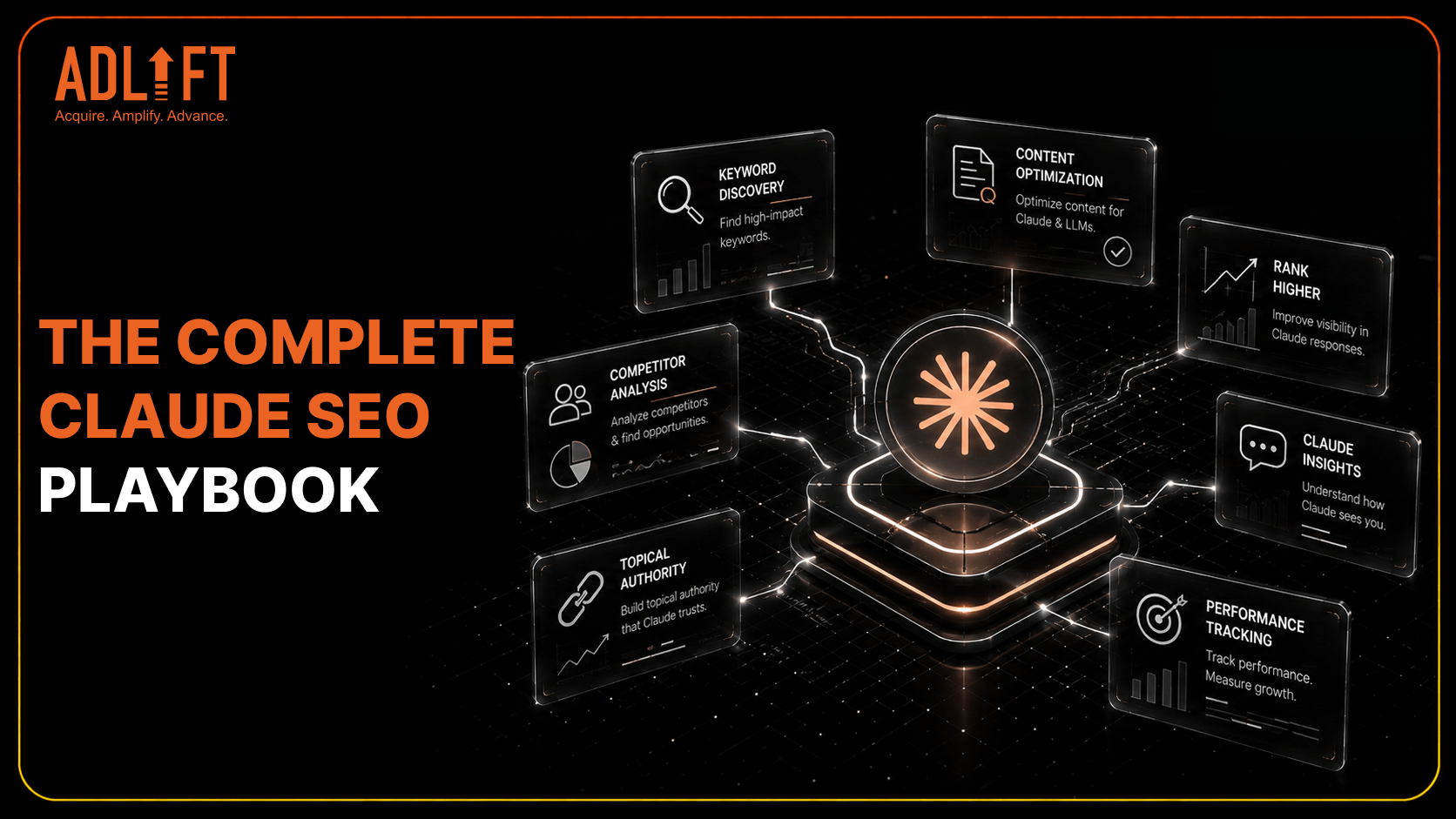
Search is changing faster than ever, and businesses that rely only on traditional optimization risk losing visibility. Artificial Intelligence (AI) assistants are becoming an important part of how people discover information, compare products, and make decisions. Anthropic’s growth reflects this shift.
In February 2026, the company raised $30 billion in Series G funding at a $380 billion post-money valuation, highlighting the increasing demand for AI-powered solutions. As Claude continues to gain traction among professionals, it is becoming a valuable tool for SEO research, content planning, and optimization.
This blog explains Claude for SEO step by step, covering practical use cases, prompt strategies, and ways to measure meaningful SEO improvements over time.
How Do You Configure Claude for Advanced SEO Workflows?
You cannot expect top rankings by simply typing “write me a blog post” into Claude and walking away. Real results come from structured prompts, clear context, and a defined workflow every single time.
That workflow matters more than ever: a June 2026 survey of 1,999 U.S. AI assistant users found Claude already captures roughly one-third of coding tasks despite holding only about 7% overall market share, proof that structured use drives outsized results. Once you nail this setup, Claude skills for SEO stop being a buzzword and start becoming your daily operating system.
Step 1: Establish Your Brand Voice and Editorial Guidelines
Feed Claude your best-performing content, style guides, and tone rules inside a Project knowledge base or your opening prompt.
This single step eliminates robotic phrasing, repetitive transitions, and generic corporate speak before a single draft gets written. Think of it as training a new hire on day one. Skip it, and every output sounds like everyone else’s.
Step 2: Feed Full-page Competitor Content into the Context Window
Paste entire top-ranking competitor articles and Search Engine Results Page (SERP) results directly into Claude’s context window. This is where Claude for SEO truly separates itself from smaller-context tools stuck summarizing snippets.
You can spot content gaps, missing subtopics, and structural weak points across the whole page-one field. Nothing gets missed because nothing gets left out.
Step 3: Enforce Strict Semantic Outlines and Entity Frameworks
Require Claude to build a detailed outline mapping primary entities, core questions, and logical headings before any draft text appears.
This blueprint step keeps your final piece comprehensive, scannable, and logically sequenced from headline to conclusion. Skipping outlines is exactly how content ends up shallow. A clear structure is non-negotiable groundwork for anything you publish.
How Do You Measure the Quality of Claude-generated SEO Assets?
Measuring your AI-assisted process means watching both reader engagement upfront and search index performance behind the scenes. Numbers don’t lie, and neither should your content strategy. This is precisely where Claude skills for SEO prove their worth over gut-feel publishing. Two dashboards make this tracking simple.
The Content Depth Tracker (Front-end Quality Signals)
Information gain score measures how much your content offers original data or fresh perspective beyond a standard SERP summary. Reader dwell time tracks how long visitors stay before bouncing back to search results.
Semantic entity coverage checks how naturally your essential topic terms appear throughout the text. Readability and flow round it all out against real human editorial standards.
The Search Visibility Dashboard (Back-end Indexing Signals)
Organic keyword velocity shows how quickly new pages climb through target rankings after publishing. Search snippet capture rate tracks how often your structured headers earn featured snippets or AI-generated summaries.
A longitudinal study of over 55,000 search queries found Google AI Overviews appeared for 13.7% of all queries and 64.7% of question-based searches. Internal link relevance and crawl status finish the picture.
What are the Common Mistakes that Ruin AI-assisted SEO Performance?
Unguided AI generation leads straight to generic, forgettable content that search engines quietly bury. Protecting your domain authority means dropping a few bad prompting habits immediately. Claude for SEO only works when paired with editorial discipline, not blind automation. Here are the three mistakes to avoid first.
Publishing Raw, Unedited AI Output
Exporting Claude’s first draft directly to your Content Management System (CMS) without human review is a rookie move.
Search engines detect repetitive, low-effort language patterns and demote pages lacking authentic human expertise fast. Editing isn’t optional; it’s the entire point of the process. Treat every draft as a starting line, not a finish line.
Ignoring Real-time SERP Intent and Freshness
Treating Claude like a live search engine, without checking current SERP trends or fast-changing data, backfires quickly.
Outdated statistics and misjudged intent send searchers clicking straight back to fresher, more current sources. Always verify what’s actually ranking today before you publish anything. Freshness checks take five minutes and can save your rankings.
Over-stuffing Keywords into Generated Copy
Forcing repeated target phrases into your copy instead of natural language and entity context is a losing bet. Algorithmic spam filters flag unnatural keyword density and quietly suppress your rankings across every target term.
Write for humans first, and the algorithms will follow along naturally. Density metrics matter far less than genuine topical depth.
How to Turn Claude SEO Workflows into Organic Growth?
Using Claude for SEO was never about churning out endless, low-quality articles at scale. It’s an expert strategy for scaling high-value content operations without sacrificing depth or accuracy. Claude skills for SEO genuinely shine when applied to audits, technical assets, and multi-channel repurposing. Let’s break down all three.
Conduct Deep Content Gap and Decay Audits
Upload your existing content library alongside current top-ranking competitor pages to spot missing subtopics and outdated sections fast. Prompt Claude to generate specific update recommendations, structural expansions, and missing entity additions for decaying pages.
This single habit revives declining organic rankings quicker than most teams expect. Decay audits deserve a permanent spot on your monthly calendar.
Build Structured Schema Markup and Technical Assets
Use Claude to write clean, error-free JavaScript Object Notation for Linked Data (JSON-LD) schema for Frequently Asked Questions (FAQ) sections, articles, and organization profiles.
Generate optimized meta descriptions, title tags, and header hierarchies tailored to genuine search intent. This is another place where Claude for SEO earns its keep beyond writing copy. Even htaccess rules and Extensible Markup Language (XML) sitemaps get faster to draft.
Repurpose Long-form Content Across Multi-channel Hubs
Transform comprehensive, top-ranking blog posts into LinkedIn articles, executive posts, email newsletters, and video scripts effortlessly. Maintaining consistent topical authority across every platform, while adapting formatting per channel, multiplies your original investment.
Consider that Claude Code has surpassed $2.5 billion in annual run-rate revenue, with weekly active users doubling since the start of 2026 alone. That kind of adoption curve is exactly why Claude skills for SEO deserve a spot on your 2026 roadmap.
Ready to Put Claude to Work for Your Rankings?
Here’s the truth: understanding how to use Claude for SEO effectively is no longer optional for teams chasing real organic growth in 2026. The brands willing to build a real workflow, not just dabble with prompts, are the ones who will own the next wave of search visibility.
Waiting on the sidelines only hands that advantage to someone else. Stop testing in isolation and start building a repeatable process today.
If you’re looking for AI visibility in Claude, you can collaborate with AdLift to build a strategy that actually delivers measurable, ranking-ready results.
Source:
https://www.anthropic.com/news/anthropic-raises-30-billion-series-g-funding-380-billion-post-money-valuation
https://arxiv.org/abs/2605.14021?