
The Content Playbook: Strategy, Creation, and Marketing in One Guide
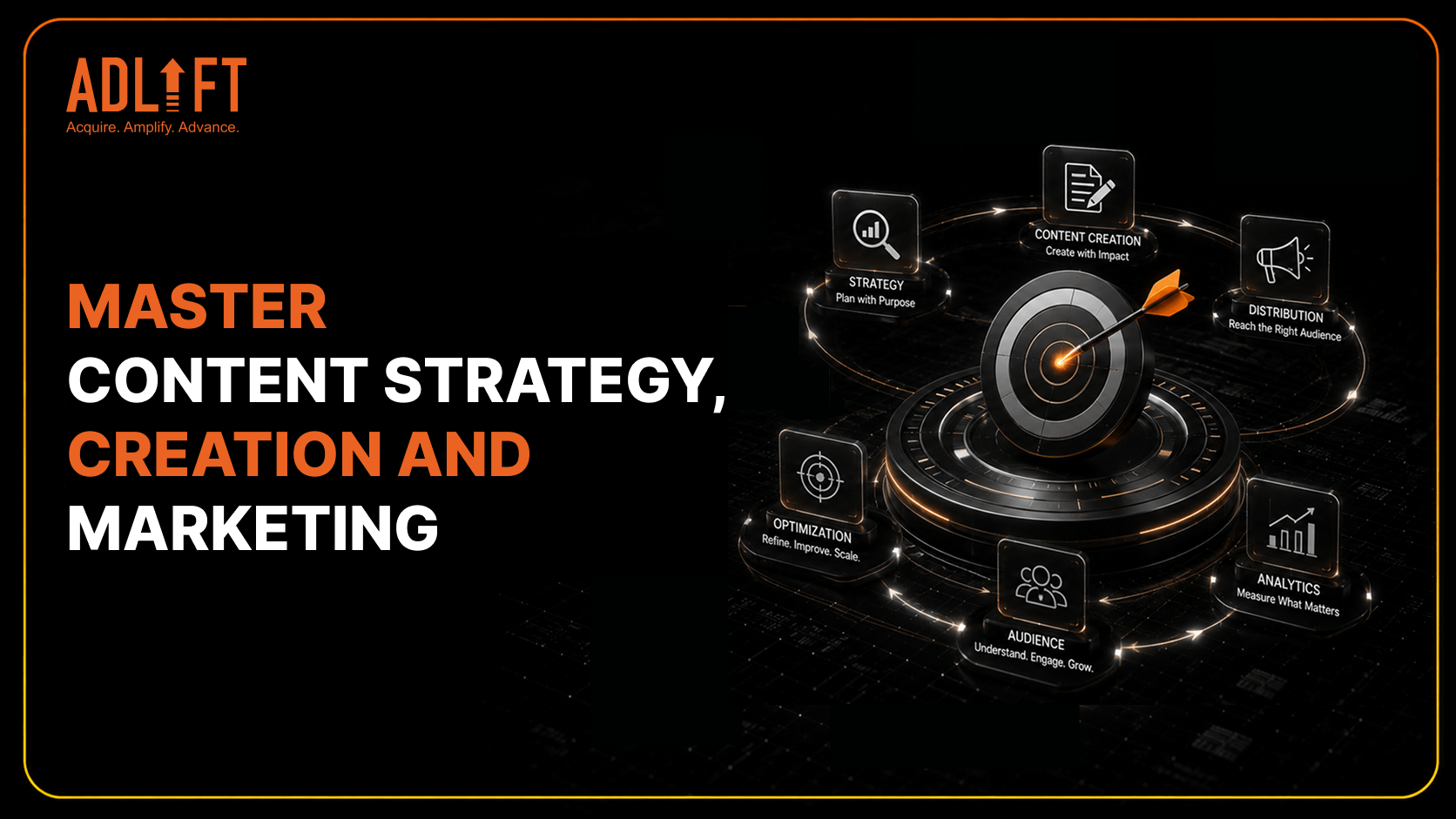
Content marketing dominates how brands earn attention, build trust, and drive revenue across nearly every industry right now, from small startups to established enterprises. The Content Marketing Institute’s newest B2B research confirms that 97% of marketers now have a content strategy in place, with only 3% still working without one.
Brands running well-documented content marketing strategies report stronger results too, since 61% say a clear strategy directly improved their overall marketing effectiveness. These numbers explain why marketing teams treat content as infrastructure, rather than a side project handled during slow quarters. A smart strategy connects discovery, trust, and conversion into one continuous customer journey.
Let’s explore how you can build, execute, measure, and optimize content that delivers lasting results, and how AdLift helps brands create data-driven content strategies that improve visibility, authority, and performance.
What is Content Marketing and its Core Purpose?
Content marketing means attracting, engaging, and retaining an audience through information they genuinely find useful and relevant. It plays a specific role in business growth, connecting early discovery with long-term customer loyalty.
Defining Content Marketing in 2026
For content marketing for beginners, the foundation is simple: understand your audience and create content that addresses their needs. Content marketing now blends written, visual, and AI-searchable formats, all built around answering real audience questions instead of interrupting attention as traditional ads do.
Key Benefits of a Strategic Approach
A documented strategy builds organic traffic growth, deepens brand authority, strengthens customer trust, and compounds into long-term conversions that outlast any single campaign.
Building a Strong Content Strategy Plan
A content strategy plan is a framework tying every piece of content to a specific, measurable business goal. Skipping this step is the biggest reason content programs stall.
Set Clear, Measurable Goals
Align every content initiative with Specific, Measurable, Achievable, Relevant, and Time-bound (SMART) KPIs like organic traffic, qualified leads, or sales-assisted revenue, rather than vague engagement targets.
Research Your Audience and Build Personas
Segment audiences by intent and buying stage, then map specific topics to the exact questions each segment asks at each stage.
Audit Existing Content for Gaps
Reviewing what already exists reveals outdated pages, thin content, and quick-win opportunities before your team creates anything new.
Select Strategic Content Types and Topics
Match format and theme choices to user intent and business goals, rather than picking formats because competitors already use them.
Content Creation Strategy: From Plan to Execution
A content creation strategy translates the plan into published work that actually holds reader attention. Every piece should map back to a strategic goal, not personal preference.
Align Creativity With Strategic Intent
Balance storytelling instincts against the specific business outcome each piece needs to drive, so creative choices support measurable goals.
Write for Both Audience and Search Engines
Blend keyword research, semantic search patterns, and genuine readability so content satisfies real readers and search algorithms together.
Use Visuals, Multimedia, and Interactive Elements
Pairing text with charts, video, or interactive tools increases dwell time and improves comprehension for complex topics.
Maintain Editorial Standards and Quality Checks
Style guides and structured review cycles keep voice, accuracy, and formatting consistent across every writer and published piece.
Content Marketing Strategies: Distributing Content for Maximum Reach
Even excellent content fails without a deliberate distribution plan behind it. New marketers often assume publishing is the finish line, when distribution actually determines total reach.
| Channel/Tactic | What it Does |
| Combine Owned, Earned, and Paid Channels | Use a mix of blogs, email campaigns, PR mentions, backlinks, and targeted advertising to expand content reach. Each channel contributes differently to visibility, authority, and audience engagement. |
| Amplify Content Through Social Media | Adapt content into platform-specific formats such as short posts, videos, and visuals. Track engagement patterns to understand which formats and messages resonate with different audiences. |
| Repurpose Cornerstone Content Into Smaller Assets | Transform long-form content into multiple formats, including social posts, videos, newsletters, and visual assets. This extends content lifespan and increases reach without creating everything from scratch. |
| Let SEO Guide Distribution Decisions | Align content distribution with keyword opportunities, search intent, and audience behavior. SEO insights help identify where content can gain visibility and attract relevant organic traffic. |
| Use AEO and GEO for Targeted Reach | Optimize content for answer engines and generative search platforms by improving clarity, structure, authority, and citation potential. AEO and GEO help brands increase visibility across AI-driven search experiences beyond traditional rankings. |
Content Marketing KPIs That Drive Real ROI
Tracking performance keeps content marketing strategies grounded in data, rather than internal opinions about what feels engaging. These five metric categories matter most for content teams.
Track Essential Performance Metrics
Monitor organic visits, dwell time, engagement scores, conversions, and lead quality as your baseline content health indicators.
Build Attribution and Conversion Tracking
Multi-touch attribution models reveal how content influences buyers across multiple funnel stages, beyond the final conversion touchpoint alone.
Watch Engagement Metrics and User Signals
Shares, comments, and scroll depth reveal how deeply your audience connects with specific topics and formats.
Use Measurement Tools and Dashboards
Google Analytics, Search Console, and dedicated reporting AI citation analysis dashboards remain the baseline toolkit for most content teams today.
Add AI and LLM Content Metrics
Track citation frequency across ChatGPT, Perplexity, Gemini, Claude, DeepSeek, and Google AI Overviews using Tesseract AI, which also reports brand share of voice and AI sentiment.
Content Optimization: Iteration and Evolution
Content doesn’t stop working the day it publishes. A deliberate content optimization cycle keeps evergreen pages relevant and competitive against fresh content from competitors.
Refresh Evergreen Content on a Schedule
Update statistics, examples, and structure regularly to keep pages competitive in search rankings over time.
Test Titles, CTAs, and Formats
Running A/B tests on different headline and call-to-action variations shows marketers precisely which combinations improve click-through rates and boost overall conversion performance over time.
Build Internal Linking and Topic Clusters
Strong linking patterns between related pages signal topical authority to search engines and guide readers deeper into your site.
Optimize Content for AI and LLM Discovery
Structure pages with concise answers, structured data, FAQs, and semantic linking, then use Tesseract to check which prompts and platforms already cite your pages versus competitors.
Avoid Common Optimization Mistakes
Ignoring analytics data or publishing content that doesn’t match real user intent wastes both budget and long-term ranking potential.
How AdLift Helps you Win With Content Marketing Strategies
AdLift is a creative-first, data-driven marketing agency that builds content marketing strategies designed specifically for measurable performance. The team combines strategic planning, SEO integration, content creation, distribution, and analytics into one unified approach.
Strategic Content Planning and Roadmapping
Engagements start with audience research, competitive analysis, and goal-aligned strategy development, supported by Tesseract AI for competitor ranking comparisons and AI Overview visibility signals before drafts even begin.
SEO, AEO and GEO-driven Content Creation
Writers build content that performs well in search results while still resonating with real audience needs and questions.
Content Distribution and Amplification
AdLift extends content reach through coordinated owned and earned channels, rather than relying on publishing alone to drive traffic.
ContentLift™ Pre-vetted Backlinks plus AI-ready Content
ContentLift™ combines 150,000+ pre-vetted, high-authority backlinks with expert-led content built for AI citation, showing full SEO metrics like DA, DR, and traffic before purchase.
Performance Tracking and Optimization Support
Ongoing measurement and iterative strategy adjustments keep campaigns tied to real data, using Tesseract AI to track brand citations, sentiment, and share of voice across AI search platforms.
Content Marketing Trends to Watch in 2026
Content marketing keeps shifting as AI, personalization, and discovery channels reshape how audiences find and evaluate brands. These four trends deserve close attention this year.
AI and Personalization Reshape Ideation
AI tools now assist with topic planning, drafting, and audience personalization at a scale most teams couldn’t manage manually.
Video and Interactive Formats Keep Growing
Audiences increasingly prefer content they can watch, click, or explore actively, rather than static text alone.
Content Increasingly Connects to Broader Marketing Ecosystems
Strong programs now tie content directly into email, social, and paid search efforts, rather than treating it as a standalone channel.
Search and AI Discoverability now Matter Equally
Content needs optimization for traditional search engines and emerging AI answer platforms together. Tesseract helps brands track where content earns citations and shape optimization priorities beyond traffic alone.
Mastering the Content Playbook
A complete content playbook blends strategy, creation, distribution, and measurement into one repeatable system that compounds over time. Skipping any single piece, especially distribution or measurement, quietly undermines the return on every dollar spent creating content.
The brands pulling ahead in 2026 pair creative instinct with real data, rather than relying on either alone. Strategic content builds visibility, authority, and measurable business outcomes when every stage connects back to a clear goal.
Evaluate your current content efforts against this playbook to spot the gaps holding your program back. If your team needs support, AdLift’s specialists, along with ContentLift™ for vetted backlinks and AI-ready content, can help build a stronger, more measurable content program.
Sources:
https://contentmarketinginstitute.com/b2b-research/b2b-content-marketing-trends-research
