AI Performance Tracker Update in Bing Webmaster Tools Explained
In 2025, search stopped feeling like a results page, because AI answers started choosing which sources people remember and repeat out loud. That is why Microsoft Bing Webmaster Tools’ addition of AI citation tracking is a practical shift for publishers who care about GEO and visibility.
The latest news from Bing Webmaster Tools introduces an AI dashboard that shows when your pages appear as sources in Microsoft Copilot and AI-generated summaries in Bing. In addition, it provides visibility into select partner integrations so you can track citations beyond Microsoft’s first-party AI experiences.
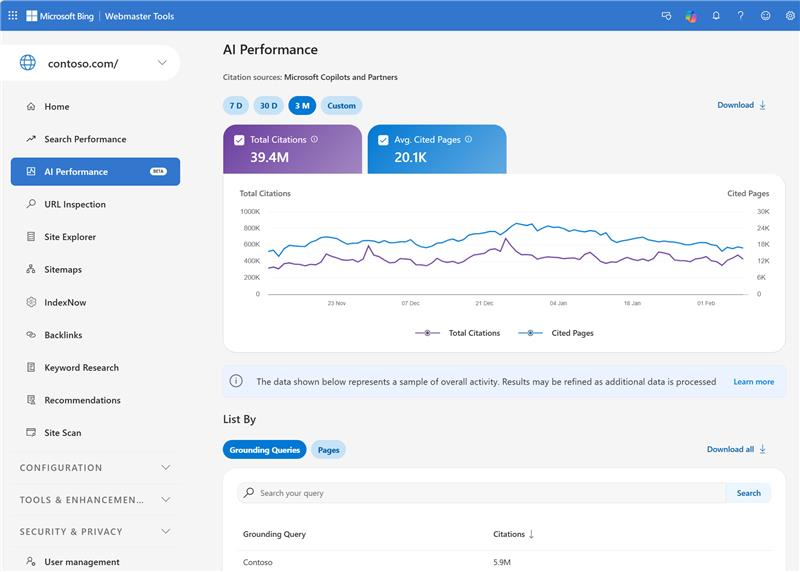
Microsoft says it respects robots.txt and other controls, so publishers keep control over participation. For click-focused teams, Bing AI performance tracker citations can act as a KPI for influence without site visits. Let’s learn what the Microsoft Bing Webmaster Tools update brings and how to use the new AI Performance dashboard to track citations.
What The Microsoft Bing Webmaster Tools Update Covers
The AI performance report extends Search Insights into AI answers by summarizing where and how often your content is cited across supported experiences. This beta update covers citations in Microsoft Copilot, AI-generated summaries in Bing, and select partner integrations, beyond classic web search today.
It is a visibility layer for answers, where attribution can happen without any clicks, sessions, or ranking reports to analyze later. If you are doing GEO, the Bing AI Performance Webmaster Tool provides early feedback on whether your information is selected to ground answers.
Also Read: Generative Engine Optimization Explained: What you Need to Know
This is where the AI performance report from Bing becomes useful, because it connects citation visibility to topics and URLs you can actually improve.
What the Bing Webmaster Tools’ AI performance Dashboard Measures
Inside the Bing AI performance report, five metrics explain citation volume, URL breadth, query context, page winners, and visibility movement over time.
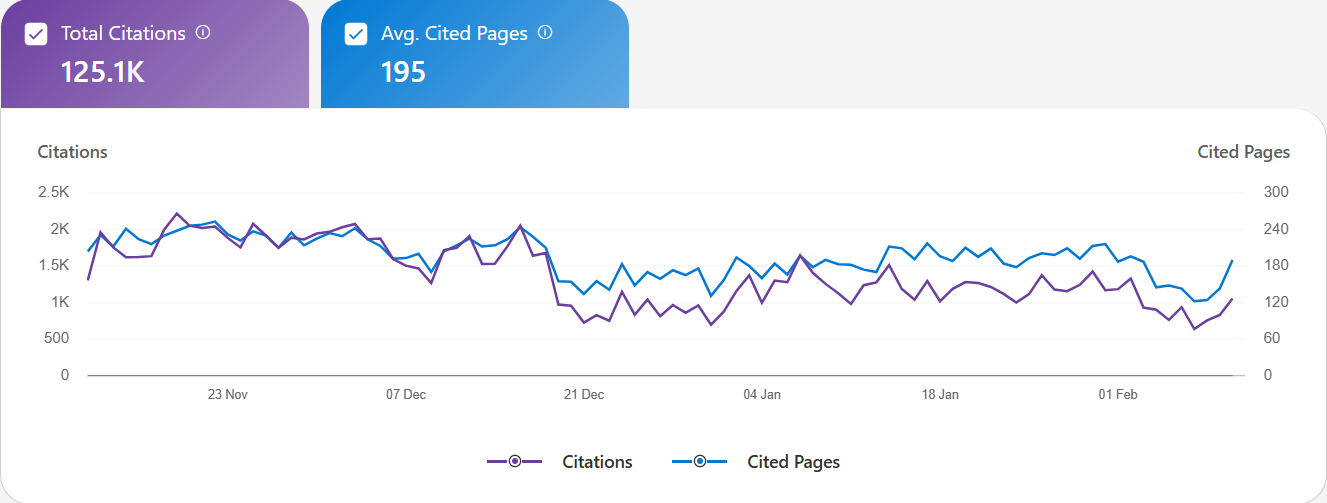
Total Citations
Total citations count how many times your site appeared as a displayed source during the selected window, not how prominent it looked.
Average Cited Pages
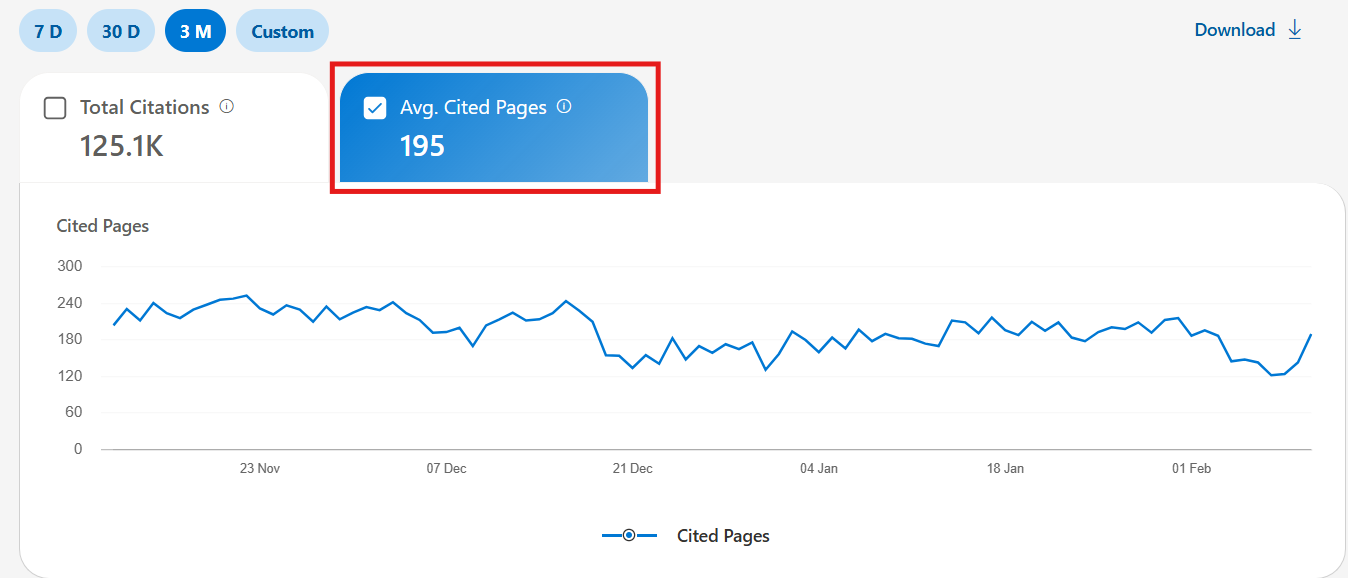
Average cited pages shows the daily average of unique pages cited, helping you see whether visibility is concentrated or distributed broadly across topics.
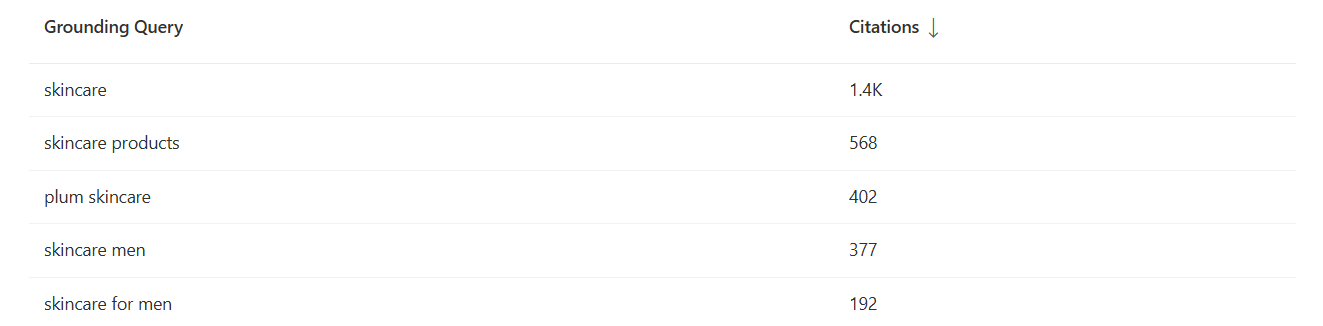
Grounding Queries
Grounding queries lists example phrases used to retrieve your cited content so that you can map citations back to real user intent patterns.
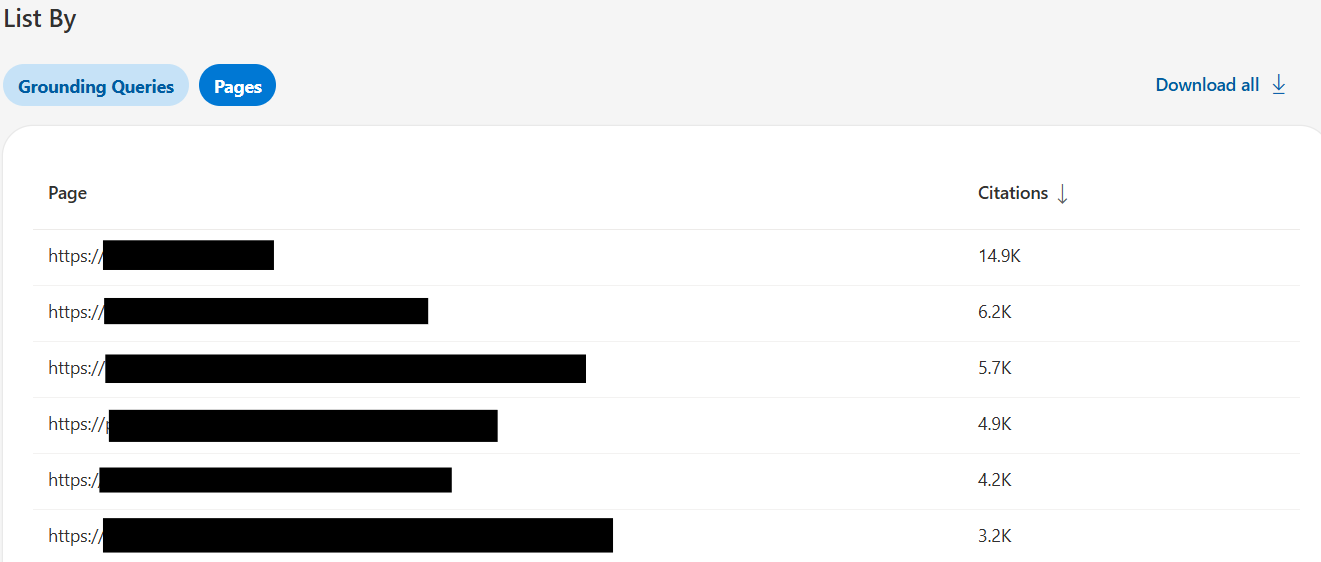
Page-level Citation Activity
Page-level citation activity ranks URLs by citation count, making it easy to spot pages that repeatedly earn AI reuse across multiple answer surfaces.
Visibility Trends
Visibility trends charts citations over time so that you can separate sustainable gains from spikes caused by news cycles or seasonality in your niche.
How to Interpret Citation Signals from the Bing Webmaster Tools’ AI Performance Tracker?
Together, these views form the Bing artificial intelligence performance report, a scoreboard for selection, attribution, and AI-era visibility at scale.
Read Citations Conservatively
Before you celebrate, remember that Microsoft says citations indicate frequency, not ranking or placement, so interpretation should remain conservative in a single-answer view.
Find “AI Winners” Fast
Use citations to find ‘AI winners,’ then open those pages and check whether the cited sections actually answer the question clearly.
Fix Winners That do Not Convert
If a page is often cited but converts poorly, add internal links, proof points, and sharper next steps that align with the intent.
Upgrade Pages That Rarely Get Cited
If a page is indexed but rarely cited, tighten definitions, remove vague filler, and align titles with the exact grounding query language.
AI Performance Optimization Checklist for Better Citations
Microsoft’s guidance for AI inclusion emphasizes scannable structure, so use descriptive headings, tight paragraphs, and FAQs that present answers clearly near the top.
Expand Supporting Coverage
When grounding queries repeat around a theme, deepen coverage with supporting subtopics and examples, because breadth plus depth reinforces expertise signals strongly.
Add Evidence Where it Matters
Support key claims with data, citations, and practical steps, because evidence makes it easier for AI systems to reuse content responsibly and safely.
Keep Answers Visible to Retrieval
Avoid hiding answers in tabs or expandable modules, since Microsoft warns that some AI systems may not render hidden content consistently during retrieval and citation.
Align Meaning Across Formats
To reduce ambiguity across formats, keep terminology consistent across text, images, and video so the same entity means the same thing everywhere, every time.
IndexNow For Faster Change Discovery
The official IndexNow page calls it a free protocol that speeds discovery, giving searchers access to up-to-date information faster at the time of search. Bing recommends IndexNow, which notifies participating search engines when a page changes, helping AI answers reference the most current version without crawling delays.
Weekly Content Hygiene For Stable Citations
Operationally, AI performance in Bing Webmaster Tools works best when you keep cited pages fresh, factual, and aligned with updates you ship weekly.
Local Listing Accuracy For AI Answers
For local teams, Bing suggests keeping Bing Places information accurate, as AI answers often surface hours, addresses, and phone numbers in a single response.
Start Turning AI Citations Into Actionable GEO Wins
If AI answers are becoming your new storefront, start using Bing’s AI performance dashboard to see when your pages get cited today at scale. Review total citations, cited pages, and grounding queries every week, then prioritize updates on URLs already trusted across Copilot and Bing summaries first.
Use Microsoft’s guidance on strong headings, lists, tables, and Q&A blocks so AI can lift complete ideas without misreading context during retrieval cycles. Pair improvements with IndexNow-style freshness habits and clean robots controls, because outdated pages or blocked sections can quietly reduce citations over time for publishers.
When you turn citation insights into a repeatable monthly workflow, you build defensible GEO reporting and keep your content visible, even as clicks decline. As a result, Bing Webmaster Tools’ AI performance becomes a practical system for tracking citation visibility across AI answers, not just rankings.