AI Agents Decoded: The Technology That Thinks, Plans, and Acts
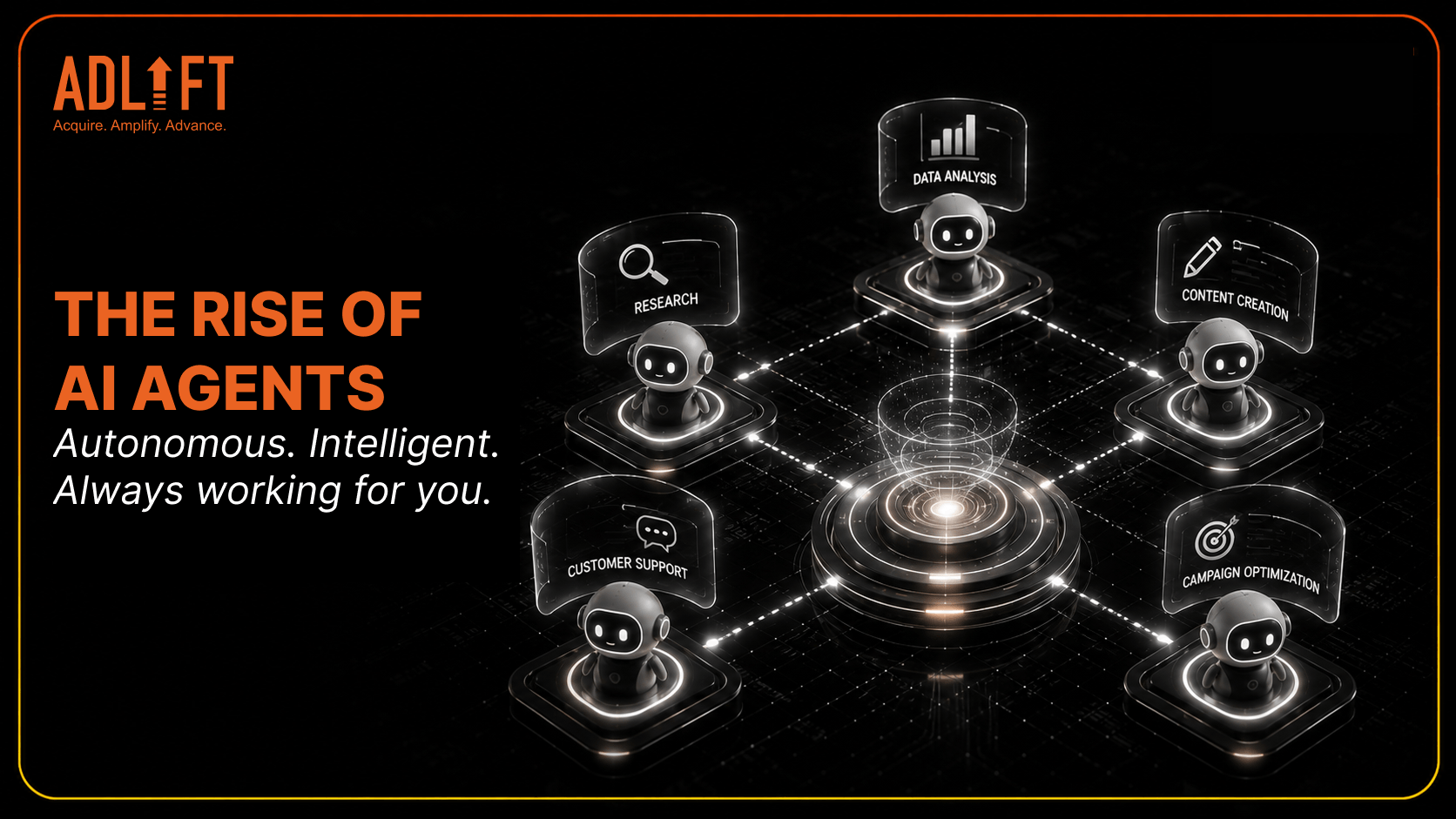
Artificial intelligence is evolving far beyond chatbots and text generation. Today’s AI systems can reason through problems, break complex objectives into smaller tasks, interact with external tools, retain context across workflows, and make decisions with minimal human intervention.
These capabilities are powered by AI agents, autonomous systems designed to perceive, plan, and act in pursuit of defined goals. This blog explores what agents in artificial intelligence are, how they function, the architectural principles that enable autonomous decision-making, and how memory, planning, tool integration, and multi-agent collaboration are transforming AI.
How Do You Build a Functional Autonomous Agent Loop?
An autonomous system cannot operate effectively until a structured decision framework anchors its core cognition loop. Implementing these core operational layers determines whether your agent completes multi-step workflows or gets stuck in infinite execution loops.
Step 1: Establish the Perception and Memory Layer
Understanding what an AI agent is begins with recognizing the limitations of raw Large Language Models (LLMs). An unassisted LLM operates purely on immediate inputs without native long-term memory. To achieve true autonomy, engineers surround the core reasoning engine with dual-tier storage:
Short-Term (Working) Memory
Maintained directly inside the model’s immediate context window. It captures active task parameters, recent reasoning scratchpads, and real-time execution outputs.
Long-Term (Persistent) Memory
Supported by external vector databases and key-value datastores. This allows the system to query past interactions, domain documentation, and historic workflow logs using Retrieval-Augmented Generation (RAG).
Step 2: Configure Goal Decomposition and Planning Modules
The defining characteristic of AI agents is goal decomposition. Rather than blindly outputting a final answer, autonomous architectures process requests through formalized reasoning strategies:
ReAct (Reasoning + Acting)
The agent alternates between explicitly stating an internal thought, selecting an external action, and observing the incoming result.
Tree of Thoughts (ToT)
The model generates multiple candidate decision branches, evaluating the potential success rate of each sub-task before choosing the optimal execution path.
Plan-and-Solve
The architecture drafts an initial sequence of operations, iteratively updating remaining steps whenever runtime errors occur.
Step 3: Integrate Real-World Tool Execution Interfaces
Tools bridge abstract language models and real-world execution environments. By exposing structured JSON schemas and function endpoints, agents gain the ability to search live web data, write and run Python scripts in isolated sandboxes, or perform CRUD operations against production databases. When a tool returns an error payload, the agent interprets the failure, corrects its formatting or parameters, and attempts the execution again.
How Do You Measure Autonomous Agent Performance and Reliability?
Evaluating autonomous agents requires monitoring both the efficiency of their underlying reasoning loops and the precision of their downstream real-world outputs.
The Cognitive Performance Tracker (Internal Reasoning Signals)
Understanding an AI agent’s operational performance requires analyzing the internal cognitive signals that influence its reasoning and decision-making:
Task Completion Rate
The percentage of broad objectives successfully solved without human intervention or infinite loop triggers.
Context Window Efficiency
The ratio of relevant information retrieved vs filler tokens consumed during complex multi-step reasoning cycles.
Planning Trajectory Drift
The frequency at which an agent strays from its original objective during recursive sub-task execution.
Self-Correction Velocity
How quickly the system identifies an API or code execution error and rewrites its query to fix the issue.
The System Impact Dashboard (External Execution Signals)
While internal signals evaluate thought quality, external metrics measure system overhead, operational cost, and safety boundaries.
| Metric | Primary Signal | Operational Target |
| API Call Latency | External Tool Responsiveness | The total round-trip execution time spent waiting for external tools, databases, and model endpoints to return data. |
| Tool Selection Accuracy | Interface Selection Precision | The rate at which the agent chooses the correct software interface and inputs for a given sub-task. |
| Human-in-the-Loop Rate | Safety and Verification Overhead | How often the system must pause execution to request human verification for high-risk actions. |
| Cost Per Resolved Objective | Compute and Token Efficiency | The total token and compute spend consumed to take a goal from initial prompt to completed outcome. |
What are the Hidden Failure Modes of Autonomous AI Agents?
Building agentic software without guardrails introduces severe operational vulnerabilities. To maintain system stability, avoid design patterns that trigger unchecked autonomous execution loops.
Unbounded Recursive Loop Triggers
Without strict runtime parameters, such as a hard limit on tool retries or max token budgets, an agent facing ambiguous feedback may endlessly analyze its own previous attempt without progressing.
Over-reliance on Unvalidated Tool Inputs
LLM outputs are inherently probabilistic. Treating model-generated strings as safe, deterministic arguments without input filtering exposes systems to syntax exceptions, invalid database queries, and injection vulnerabilities.
Monolithic Single-agent Designs for Multi-domain Tasks
As a single context window accumulates instructions for disparate domains, such as data scraping, financial auditing, and creative writing, it experiences instruction drift and loses track of core constraints.
How to Turn Agentic Capabilities into Operational ROI?
Autonomous AI is no longer a research experiment; it is a fundamental shift in software architecture that turns manual operational drag into scalable execution pipelines.
Deploy Specialized Multi-agent Orchestration Networks
Enterprise workflows demand modular architectures. Rather than using an all-in-one prompt, deploy specialized multi-agent teams:
- Break complex business processes into modular, specialized roles (e.g., researcher, writer, validator) managed by an orchestration supervisor.
- Enforce strict handoff protocols between agents to maintain pristine context windows and minimize task-switching noise.
Scale complex operations by allowing specialized agents to work in parallel before merging results into a unified output.
Implement Deterministic Guardrails Around Stochastic Reasoning
To make dynamic AI systems enterprise-ready, wrap them in hard execution boundaries:
- Wrap autonomous model execution layers inside strict code checks, schema validations, and deterministic safety boundaries.
- Require explicit human authorization for high-stakes actions like financial transactions, external communications, or database deletion.
- Ensure full system auditability by logging every step of the agent’s thought process, tool selections, and intermediate outputs.
Establish Long-Term Stateful Memory Systems
To maximize long-term business utility, agents must retain organizational context over time:
- Implement hybrid storage engines combining vector databases for semantic retrieval with key-value stores for precise user state tracking.
- Allow your agents to continuously update user profiles, organizational knowledge graphs, and past preference patterns over time.
- Eliminate repetitive onboarding friction by enabling your agents to recall past execution successes and build custom workflows over time.
Ready to Build AI Agents That Think and Act?
AI agents are transforming artificial intelligence into autonomous systems that can reason, plan, use external tools, retain memory, and execute complex workflows with minimal human intervention. Their long-term success depends on robust architectures that combine reliable planning, persistent memory, performance evaluation, safety guardrails, and transparent decision-making throughout every execution cycle.
As organizations accelerate the adoption of agentic AI, understanding these architectural foundations becomes essential for building dependable, scalable, and efficient intelligent automation solutions.