ChatGPT Citation Guide: Formats, Examples, and Best Practices
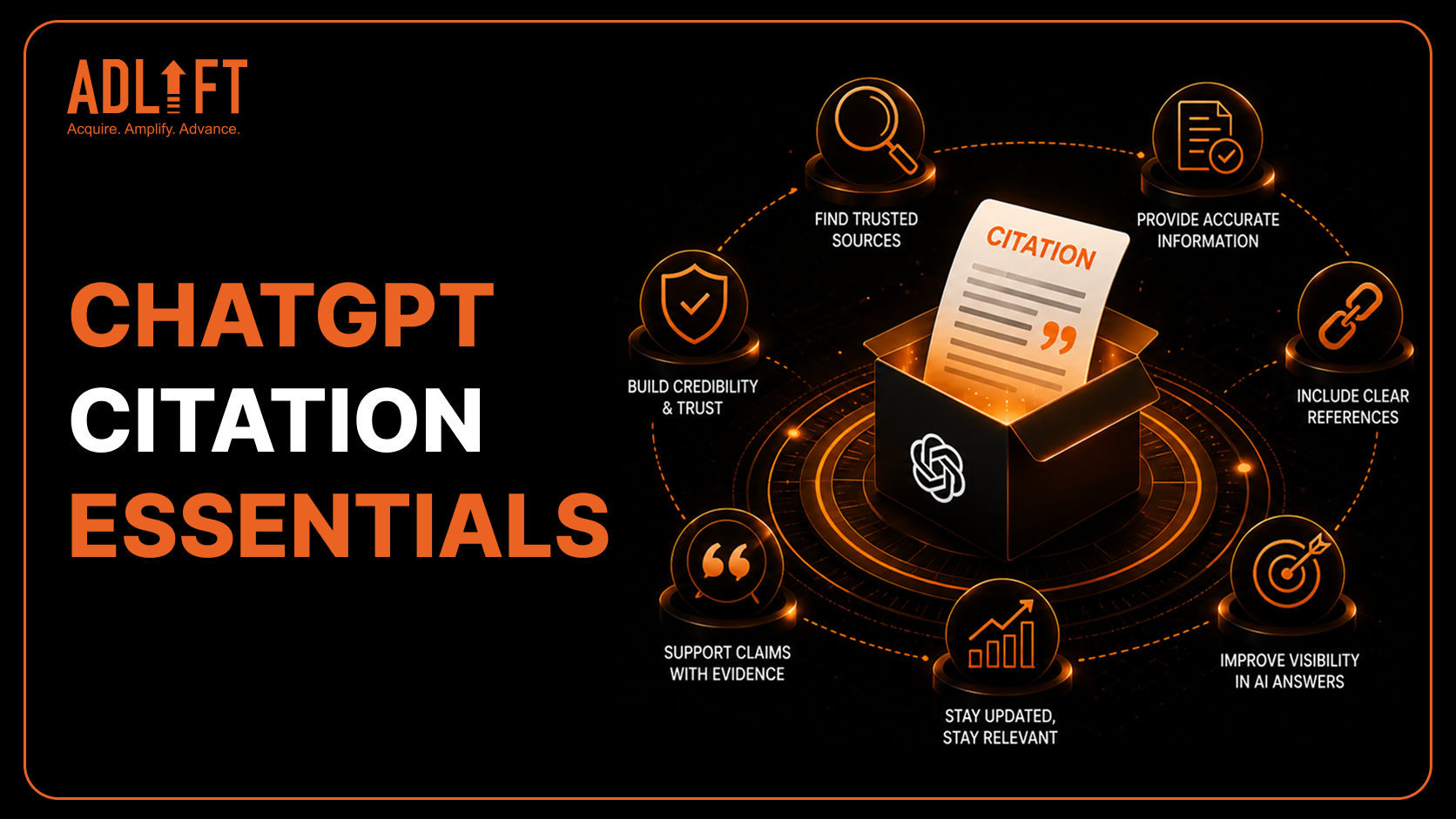
Research no longer begins only with a search engine, library database, or bookmarked industry publication. Generative AI has become another starting point for exploring information. Students, marketers, researchers, and professionals increasingly use ChatGPT for brainstorming, summaries, explanations, research support, and content development.
Writers now need to understand when AI contributions should be acknowledged and how that acknowledgment should appear. This is where ChatGPT citations become relevant across academic, professional, and digital publishing environments.
However, the correct format depends on the citation style, institution, publisher, and purpose of the content. This blog explains how to cite ChatGPT using common formats, practical examples, and responsible citation practices.
What is a ChatGPT Citation?
A ChatGPT citation identifies the role ChatGPT played in creating or supporting a piece of work. It may acknowledge generated text, summaries, explanations, analysis, or other AI-assisted material.
Traditional citations usually guide readers toward books, research papers, reports, journals, or webpages. AI citations work somewhat differently because they document interaction with a generative system.
The 2026 Student Generative AI Survey by the Higher Education Policy Institute found that 95% of surveyed UK undergraduates use AI in at least one way, while 94% use generative AI to support assessed work.
There is also another meaning of ChatGPT citations within AI-powered search. ChatGPT Search can display inline citations that connect generated answers with supporting webpages.
Therefore, citing ChatGPT and being cited by ChatGPT represent two different ideas. The first concerns attribution within your own work. The second relates to visibility within AI-generated search experiences.
Why is Citing ChatGPT Important?
Citation creates a clear record of how AI contributed to a completed piece of work. It helps readers understand where generated material influenced research, writing, or analysis. In academic settings, this transparency supports clear research practices and responsible attribution.
On the other hand, in professional environments, disclosure can explain how AI supported content development or analysis. Generative AI has also become part of regular academic workflows. According to QS research published in 2026, 67% of academics and 62% of students use generative AI at least weekly for teaching, research, study, or administrative work.
Major citation systems have also introduced guidance around generative AI. However, universities, publishers, and organizations may apply additional requirements. For that reason, writers should always check the policy governing their specific document.
When Should You Cite ChatGPT?
A citation is worth considering when ChatGPT makes a meaningful contribution to the final content. This may include quoted output, paraphrased responses, analysis, or substantial AI-assisted explanations.
Citation may also be useful when a particular ChatGPT response becomes part of the research itself. For example, a paper studying AI responses may document exact prompts and outputs. The need for clear attribution is becoming more visible in academic work. HEPI found that 12% of surveyed students directly included AI-generated text in assessed work in 2026, compared with 8% in 2025 and 3% in 2024.
Requirements can vary across universities, publishers, workplaces, and professional bodies. Checking those guidelines before submission helps keep the process clear.
ChatGPT Citation Formats
There is currently no single universal format for citing generative AI. APA, MLA, Chicago, Harvard, and IEEE each approach attribution differently. The following formats offer a practical starting point. However, writers should compare the final reference with current institutional or publisher guidance.
APA Style
APA guidance recommends documenting meaningful use of generative AI and citing it appropriately when generated material contributes to the final work. The required treatment may differ when referencing ChatGPT as a tool versus documenting a specific retrievable conversation.
A citation may identify OpenAI, ChatGPT, the relevant model or version, and other details required by the applicable APA guidance. Writers should also follow any additional requirements set by their university, publisher, or organization.
MLA Style
MLA recommends citing generative AI when its output is quoted, paraphrased, or otherwise incorporated into a work. ChatGPT should not normally be presented as the author of the generated material.
The citation can instead begin with a description of the prompt or generated content, followed by details such as ChatGPT, the model used, OpenAI, the generation date, and a stable, shareable conversation link when available.
Chicago Style
Chicago allows ChatGPT use to be acknowledged within the main text or through notes. The appropriate format depends on how the AI-generated material was used and whether readers can retrieve the underlying interaction.
Relevant details may include ChatGPT, OpenAI, the prompt or generated material being discussed, and the date of the interaction. Writers should follow the Chicago format required for their particular document.
Harvard Style
Harvard referencing varies across universities and publishers, so there is no single format that applies everywhere. Institutions may require details such as OpenAI, ChatGPT, the year, the type of AI resource, the relevant URL, and the access date.
Writers should therefore follow the specific Harvard referencing guide prescribed by their university, course, or publisher.
IEEE Style
IEEE focuses strongly on disclosure when AI-generated content is included in submitted work. Authors may need to identify the AI system used, specify the sections containing AI-generated material, and explain the extent of its contribution.
Editing or grammar assistance may be treated differently from substantive AI-generated content, so writers should check the policies of the relevant IEEE publication.
How to Cite ChatGPT Step-by-step
Learning how to cite ChatGPT becomes easier when the required information is collected from the beginning. A simple process can keep every citation accurate and consistent.
Gather the Required Information
Start by recording important details connected with the ChatGPT interaction. These details make final formatting much easier. Useful information may include:
- AI platform and provider
- Model or model version
- Date of the interaction
- Prompt or generated output description
- Shareable conversation link
- Access date, when required
Saving this information can also help when an institution requests documentation of AI use.
Choose the Appropriate Citation Style
Next, identify the citation style required for your document. The correct choice usually depends on the institution, publisher, profession, or subject area. APA commonly appears across social sciences and research writing.
MLA is widely used within humanities subjects, while Chicago supports many academic environments. Harvard remains common across institutions using author-date referencing. IEEE is strongly associated with engineering, technology, and technical publishing.
Format the Citation Correctly
Once the style is clear, arrange the information in the required order. Each referencing system gives different priority to specific citation elements. APA generally focuses on author, date, title, description, and source. MLA often begins with a description of generated content.
Chicago may use notes or author-date references, while Harvard generally follows an author-date structure. IEEE commonly uses numbered references alongside disclosure requirements.
Most importantly, the chosen format should remain consistent throughout the document.
Verify the Citation
Review every citation before publishing or submitting the work. Check dates, model details, capitalization, punctuation, links, and citation order. Then compare the completed reference with the latest applicable guidelines. This final review helps create a clear and dependable attribution trail.
How ChatGPT Citations Apply Across Different Content Types
The way ChatGPT is acknowledged can vary depending on the type of content, the purpose of its use, and the guidelines followed by the writer or institution. The examples below show how AI attribution can be handled across common academic, professional, and digital content formats.
Research Papers
Research papers often require clear documentation of the sources, tools, and methods used during the research process.
If ChatGPT contributes to explanations, analysis, summaries, or other meaningful parts of the work, its use may need to be acknowledged according to the required citation style.
Researchers should also cite original scholarly sources directly whenever those sources support the final argument, data point, or conclusion.
Essays
Students may use ChatGPT for brainstorming, explanations, outlining, or other forms of academic support when permitted by their institution.
If AI-generated material meaningfully contributes to the final essay, appropriate citation or disclosure may be required.
The exact approach should follow the citation style, course requirements, and academic integrity policies applicable to the submission.
Theses and Dissertations
Theses and dissertations generally follow detailed institutional requirements for research documentation and source attribution.
Meaningful use of ChatGPT may need to be recorded within references, acknowledgments, methodology sections, appendices, or other appropriate areas.
Researchers should follow their university’s guidelines when deciding how and where to document AI-assisted work.
Presentations
Presentations can acknowledge ChatGPT when AI-generated information, explanations, or other content contributes meaningfully to the final material.
Attribution may appear in slide notes, footnotes, captions, acknowledgments, or a references section, depending on the required format.
The chosen approach should remain consistent with the citation style and presentation guidelines being followed.
Blogs and Articles
Blogs and articles often allow greater flexibility in how AI assistance is disclosed. Writers may acknowledge meaningful ChatGPT use through an editorial note, methodology statement, source disclosure, or another suitable format.
When ChatGPT helps identify external studies, reports, statistics, or other sources, writers should review and cite the original publication directly whenever possible.
When You Should and Shouldn’t Cite ChatGPT
The level of AI contribution can help determine when citation or disclosure is appropriate. Significant generated contributions generally need clearer acknowledgment than routine writing assistance.
Academic Writing
Academic environments usually place strong emphasis on transparent sourcing. Citation may be appropriate when ChatGPT contributes explanations, analysis, paraphrased material, quoted text, or meaningful ideas.
Some universities may also request broader disclosure of AI-assisted work. Following course or institutional guidelines provides the clearest approach.
Professional Documents
Business reports, white papers, presentations, and internal documents may follow company-specific AI policies. Substantive AI-generated analysis can be acknowledged when disclosure adds helpful context.
The format may be simpler than a formal academic citation. The organization’s policy should guide the final presentation.
Content Writing
Content teams can use AI for research, outlines, ideation, editing, and drafting support. Disclosure practices may depend on publisher or client guidelines. Original research, statistics, and expert commentary should still connect directly with their sources. This creates a clearer source trail for readers and modern search systems.
Brainstorming and Proofreading
Routine brainstorming, spelling support, and grammar correction may follow lighter disclosure requirements.
Some organizations distinguish these uses from substantive AI-generated content. IEEE, for example, treats editing assistance differently from generated article content. A brief policy review can clarify the expected approach before submission.
Common ChatGPT Citation Mistakes
Strong citation habits become easier when writers know which details deserve extra attention. A short review before submission can improve accuracy, consistency, and clarity across the entire document.
Missing Important Citation Details
A complete citation should include the information required by the selected style. These details may include the provider, tool, date, model, prompt description, and shareable conversation link.
Recording this information during the ChatGPT session can make final citation preparation easier.
Using the Wrong Citation Style
Different citation systems organize AI information differently. APA and MLA, for example, follow distinct approaches when citing generative AI. The simplest solution is to identify the required style before creating the reference. This keeps formatting consistent across the document.
Citing ChatGPT Instead of the Original Source
ChatGPT can help surface studies, reports, webpages, and useful research material. When information comes from an identifiable source, review that publication directly. Then cite the source wherever appropriate.
A separate ChatGPT citation can still acknowledge meaningful AI assistance when relevant guidelines recommend it.
Forgetting In-text Citations
A reference list entry and an in-text citation serve different purposes. The reference provides fuller source information, while the in-text citation connects a statement with that source. Include both whenever the selected referencing style requires them.
Trusting AI-generated References Without Verification
AI can make research more efficient by helping writers discover useful references. Verification should remain part of the research process. Open the source and confirm its author, title, publication date, and supporting information. This creates a clearer and more reliable reference trail for the final document.
How Content Creators Can Improve Visibility in AI Citations
As AI-powered search becomes more common, brands and publishers have another visibility opportunity beyond traditional search results. The goal is no longer limited to ranking on search engines. Content can also become a source referenced within AI-generated answers.
Create Content That AI Systems can Understand
Content should answer genuine user questions clearly and provide enough context to support the information presented. Useful practices include:
- Use descriptive headings that reflect real search questions
- Provide direct and concise answers before adding detail
- Support important claims with reliable sources
- Add original insights, examples, or first-party information
- Maintain clear connections between the brand, its expertise, products, and services
These elements make content easier for both readers and AI-powered systems to understand and interpret.
Strengthen Content for Generative Engine Optimization (GEO)
GEO focuses on improving how brands and their content appear across AI-generated search experiences.
For publishers, this means creating accurate, well-structured, and evidence-backed content around topics their audiences actively research. Technical accessibility also matters, as public webpages need to remain accessible to relevant search crawlers for discovery within AI search platforms.
SEO and GEO can therefore work together, supporting visibility across traditional search results and conversational AI experiences.
Measure AI Search and Citation Visibility
Tracking AI visibility helps marketers understand how frequently their brand or content appears across AI-powered platforms.
AdLift’s Tesseract helps brands monitor AI search visibility, citation appearances, sentiment analysis, prompt-level performance, and competitor visibility. These insights can show which content contributes to AI visibility and where further optimization opportunities may exist.
As conversational discovery develops, AI citation visibility can become another useful measurement alongside established SEO performance metrics.
Strengthen Your Content With AI Citation Practices
Generative AI is changing how people research, write, and discover information, making clear attribution increasingly important for credible content. Accurate ChatGPT citations should follow the required referencing style, publishing guidelines, and type of AI contribution involved.
For brands and publishers, responsible citation can also support stronger visibility across modern search experiences. AdLift helps businesses strengthen their presence through SEO and Generative Engine Optimization strategies designed for traditional and AI-powered search.
Tesseract gives marketers a clearer view of how their brand is represented across AI platforms, helping uncover citation trends, prompt opportunities, and competitive gaps. Combining responsible AI practices with a well-planned search strategy can help brands build greater credibility, improve discoverability, and strengthen their presence across evolving digital platforms.
Sources:
https://www.hepi.ac.uk/reports/student-generative-ai-survey-2026/
https://www.qs.com/insights/generative-ai-higher-education-academic-student-perspectives