From Search To Assistants: Optimizing Product Content For Shopping Through ChatGPT
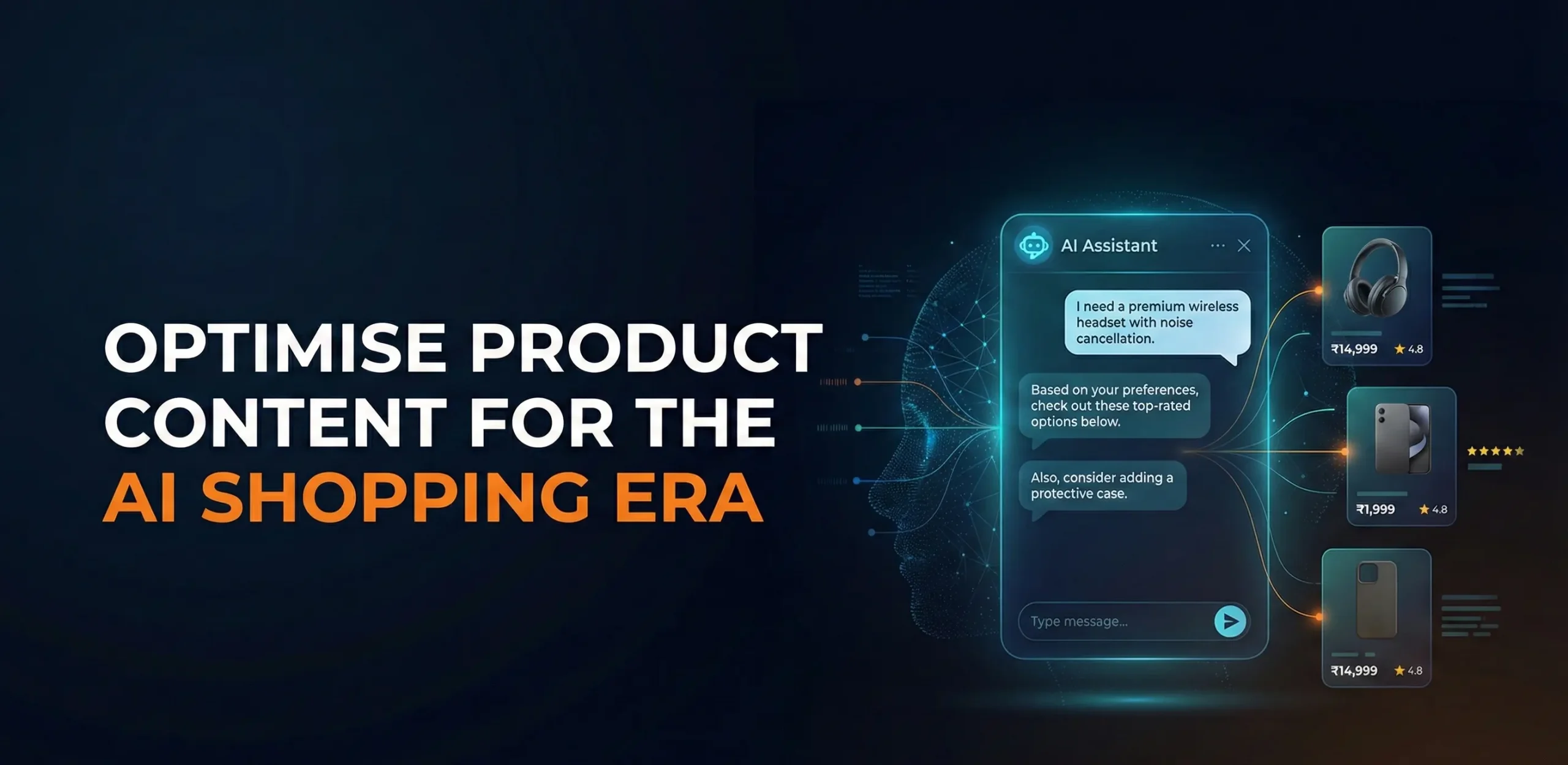
Picture a shopping experience where your virtual assistant remembers your preferences and instantly suggests exactly what you need. It guides you smoothly from product discovery to checkout. This is the new reality, powered by AI tools like ChatGPT.
Tools like ChatGPT are reshaping how consumers explore, evaluate, and purchase products online. The shift is accelerating fast. In Adobe’s survey of 5,000 consumers in the U.S., 39% have already used generative AI for online shopping. Another 53% planning to do so soon, highlighting how central AI is becoming to the shopping journey.
From personalized recommendations to seamless checkout support, AI now influences every stage of shopping. Let’s look at how AI-driven solutions are transforming the online shopping experience, and why businesses must optimize their product pages for ChatGPT to stay competitive.
Understanding the Three AI Shopping Layers
As AI reshapes online shopping, it’s important to distinguish among the three layers in which AI operates. Each layer influences product discovery and purchase decisions differently, and each requires a different optimization approach.
- AI Assistants Embedded On-site: These are conversational tools integrated directly into e-commerce platforms. They help users navigate products, answer questions, and complete purchases within the brand’s own environment.
Optimizing for this layer focuses on product data accuracy, real-time inventory, and conversational UX.
- ChatGPT and Similar Assistants as External Discovery Layers: Platforms like ChatGPT increasingly act as discovery engines outside the brand’s website. Users ask for product recommendations, comparisons, and buying advice before ever visiting a store.
Visibility here depends on how clearly and consistently product information appears across trusted sources, not just on-site content.
- Search Engines V.S. Commerce Assistants: Traditional search engines rank pages. Commerce-focused assistants recommend products. While search optimization prioritizes relevance and authority signals, assistant-led shopping prioritizes clarity, comparability, and decision confidence.
Understanding these layers helps brands design product content that performs across both search results and conversational shopping experiences.
ChatGPT Shopping: Revolutionizing E-Commerce Experiences
According to McKinsey, 71% of consumers expect personalized interactions, and conversational AI tools like ChatGPT are becoming essential for meeting this demand.
ChatGPT shopping refers to the integration of AI-driven conversational agents within e-commerce platforms to enhance discovery, decision-making, and conversion. By using Natural Language Processing (NLP), ChatGPT enables customers to engage in real-time conversations, receive personalized recommendations, and navigate purchases with greater clarity and confidence.
This creates a more intuitive, fluid shopping experience that aligns closely with what modern consumers expect.
Structured Product Data for Assistant-Led Shopping
For AI shopping assistants like ChatGPT, structured product data is less about ranking and more about reasoning. Assistants rely on signals to understand intent, compare options, and support confident decisions in conversational contexts.
Product pages should therefore be optimised around three assistant-specific signal types.
Disambiguation Signals
AI assistants must first understand exactly which product a user is referring to, especially when queries are conversational or loosely phrased. Disambiguation signals reduce confusion between similar products.
Clear attributes such as model names, variants, sizes, colors, compatibility details, and use cases help ChatGPT distinguish one product from another. Structured fields for specifications, exclusions, and “not suitable for” scenarios prevent incorrect recommendations when users ask follow-up questions or refine their intent mid-conversation.
Strong disambiguation ensures the assistant responds with precision instead of broad or generic suggestions.
Comparability Signals
Shopping assistants are frequently asked to compare options rather than surface a single result. Comparability signals allow ChatGPT to align products and clearly explain differences logically.
Consistent formatting of features, specifications, pricing tiers, warranties, and performance indicators enables side-by-side comparisons in natural language. When products share aligned attributes, the assistant can explain trade-offs more confidently, helping users evaluate alternatives without leaving the conversation.
These signals turn product pages into comparison-ready data sources rather than static listings.
Decision-support Signals
Unlike search engines, assistants are expected to guide users toward decisions. Decision-support signals help ChatGPT answer questions like “Which is better for me?” or “Is this worth buying?”
Content such as use-case summaries, suitability indicators, FAQs, review highlights, delivery timelines, and return policies gives the assistant context to support purchase confidence. Clear availability, pricing clarity, and promotion logic further help the assistant nudge users toward action at the right moment.
Well-designed decision-support signals enable ChatGPT to move beyond information delivery and into guided shopping assistance.
Leveraging Tesseract by AdLift for AI Search Visibility
As product discovery shifts from keyword-based search to assistant-led recommendations, visibility is no longer defined solely by rankings. What matters is how often, in what context, and for what intents AI assistants surface your brand. Tesseract by AdLift is built to measure and influence that assistant-level visibility. It does the following:
Measures Assistant Visibility
AI assistants do not rank pages the way traditional search engines do. They cite, summarize, and recommend based on patterns they recognize across content. Tesseract tracks how frequently your brand and products are referenced by large language models such as ChatGPT. It also identifies the prompts, intents, and content signals that trigger those mentions.
This gives teams clear visibility into which products appear during conversational shopping journeys and which are being overlooked.
Identifies What Influences AI Recommendations
Tesseract analyzes language, structure, and metadata patterns that correlate with assistant citations. It reveals which keywords, attributes, and content formats increase the likelihood of AI-driven visibility and where competitors are gaining preference.
By connecting assistant responses back to on-site content, Tesseract highlights gaps in clarity, comparability, and decision-support signals that assistants rely on when generating recommendations.
Guides AI-first Content Optimization
Insights from Tesseract inform focused updates to product copy, structured data, and metadata so content aligns with how AI models interpret relevance and intent. Instead of optimizing for clicks or rankings, teams can optimize for assistant recall, citation, and recommendation.
This approach increases the chances that products are surfaced naturally within conversational shopping flows, where users seek guidance rather than links.
ChatGPT Shopping Assistant: Transforming Customer Engagement
A ChatGPT shopping assistant is an AI-powered virtual assistant designed to help customers navigate online shopping with ease.
As a personal shopping assistant, it ensures customers receive a more engaging, personalized experience by providing instant assistance, recommending relevant products, and addressing queries in real time.
Enhancing the Conversational Shopping Experience
The conversational interface of ChatGPT makes the shopping experience more fluid and engaging, transforming how customers interact with e-commerce platforms. Instead of navigating through multiple pages or applying filters, customers can simply chat with ChatGPT to ask for advice, product details, or help with decision-making.
ChatGPT also adapts to natural language inputs, allowing shoppers to express preferences, concerns, or comparisons in their own words. This makes the experience feel more intuitive and human-like.
Improved Product Recommendations with ChatGPT
Leverages AI-driven algorithms to provide hyper-personalized ChatGPT product recommendations that feel relevant and timely. By analyzing previous searches, past purchases, and browsing patterns, ChatGPT identifies what users are most likely to consider and suggests products that align closely with their needs.
The assistant can also dynamically adjust recommendations in response to real-time questions or newly shared preferences, ensuring each suggestion matches the shopper’s immediate intent.
Instant Checkout through ChatGPT
By integrating payment gateways and real-time order systems, ChatGPT helps customers complete purchases quickly and effortlessly. After selecting a product, customers can rely on ChatGPT to assist with size choices, shipping details, and payment options, all within a single conversation.
This streamlined checkout journey reduces drop-offs, shortens decision time, and supports a frictionless buying experience that keeps customers engaged until order confirmation.
The Future of AI-Powered Shopping: What’s Next for ChatGPT in E-Commerce?
According to industry projections, the global AI-driven e-commerce market is expected to reach USD 22.6 billion by 2032, rising sharply from about USD 8.65 billion in 2025. This growth signals a major shift toward AI-powered discovery, recommendation engines, conversational journeys, and personalized shopping at scale.
AI, particularly ChatGPT, is set to evolve rapidly in the coming years, reshaping how consumers browse, compare, and purchase products online.
One of the biggest shifts will be the rise of voice commerce, in which customers interact with e-commerce platforms via voice commands rather than typing. Voice-activated shopping assistants will make product discovery faster and more natural, giving users hands-free access to personalized suggestions and instant answers.
Another major trend is deep hyper-personalization. AI will increasingly analyze real-time behavior, past interactions, contextual preferences, and predicted needs to recommend products before customers actively search for them. This level of anticipation will push e-commerce toward more proactive, curated experiences.
We can also expect smarter AI-driven product comparison, improved visual search capabilities, and tighter integration between AI assistants and supply-chain systems. This ensures customers always receive the most accurate pricing, availability, and delivery information. As AI sophistication grows, ChatGPT will become a central layer of e-commerce engagement, driving both conversion and long-term customer loyalty.
Preparing Your Brand for the AI-driven Shopping Era
AI-led shopping is rapidly becoming a core part of how enterprise retailers and large-scale digital commerce platforms influence discovery and purchasing decisions.
ChatGPT enables enterprises to support customers at scale through real-time guidance, personalized recommendations, and consistent decision support across thousands of SKUs. The challenge lies in understanding how AI assistants interpret, prioritize, and surface product content within these interactions.
Tesseract by AdLift addresses this challenge by giving enterprises direct visibility into how their products and brands appear within AI-generated responses. It helps large organizations identify gaps in assistant-level visibility and to understand why competitors are being cited. It also helps optimize product content to align with how AI models evaluate relevance and intent.
Ready to optimize your e-commerce platform for AI-powered shopping? Start integrating ChatGPT and use Tesseract by AdLift to strengthen product visibility, enhance AI-driven discovery, and deliver a smarter, more efficient shopping experience.
Sources:
https://www.sellerscommerce.com/blog/ai-in-ecommerce-statistics/